DSALTA
A compliance platform and its brand, designed as one system
DSALTA is an AI compliance platform. It gets a company ready for audits like SOC 2, keeps its controls tested and watches the vendors it depends on. For a year I designed the platform, the brand and everything the company put in front of its customers, from the website to the workshop decks.
- Year2025
- ClientDSALTA
- RoleProduct Designer
- ScopePlatform, brand, design system, website and sales materials
- Built WithAdobe Illustrator, Adobe InDesign, Figma, Framer
- Livedsalta.com (opens in a new tab)
In one line
I designed DSALTA's compliance platform and its brand as one system, so a startup doing compliance for the first time reads the same clear language in the product, on the website and in every document the company sends.
The problem
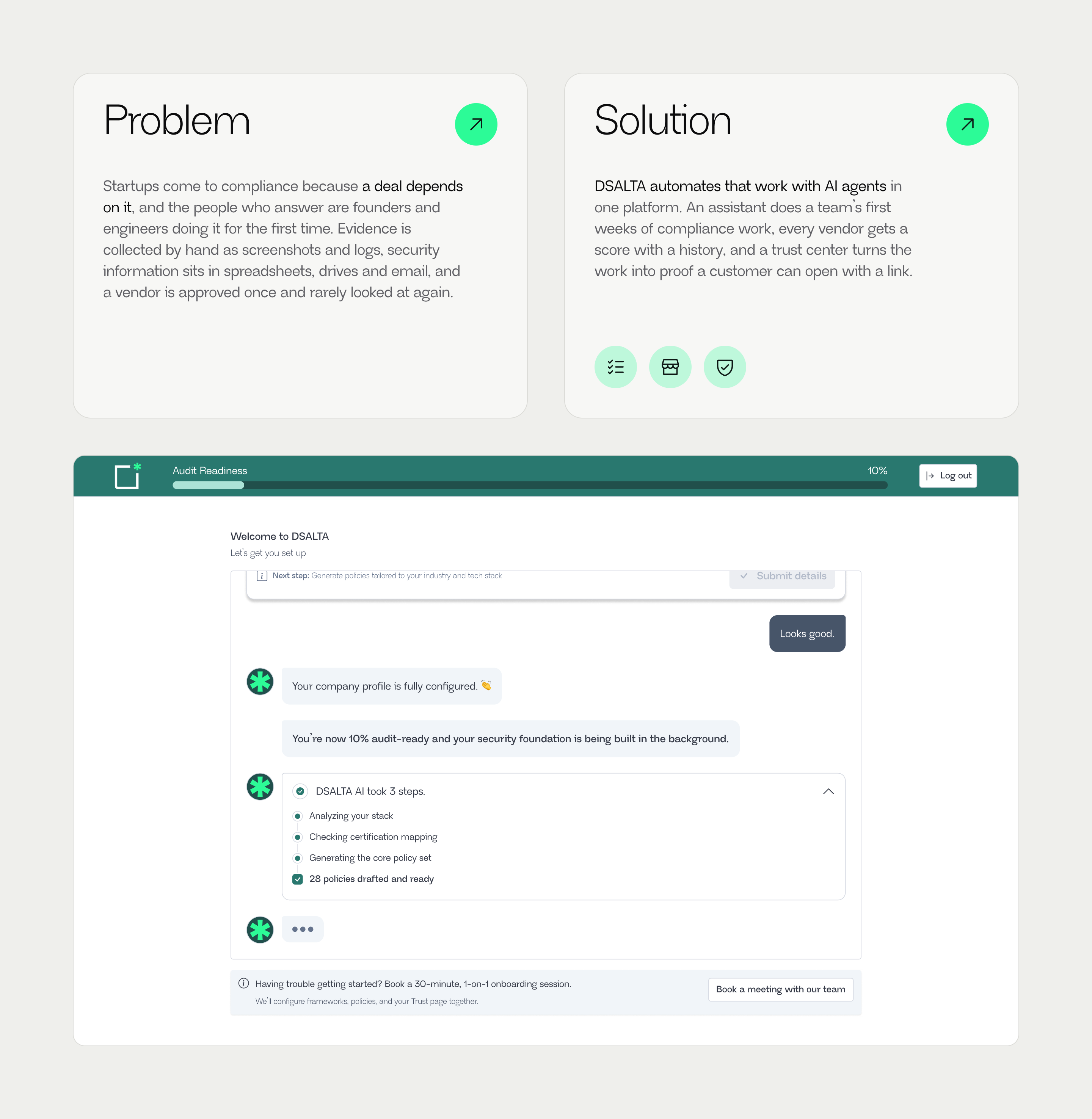
DSALTA's customers are mostly startups, and the people who answer for their compliance are founders and engineers. Most of them are doing it for the first time.
Without a compliance management tool, the work is manual. Evidence is collected by hand as screenshots and logs, security information sits in spreadsheets, drives and email, and a vendor is approved once with a static questionnaire and rarely looked at again. DSALTA automates that work with AI agents.
My part was to make a field written in acronyms and audit terms readable for someone doing it the first time, and to keep that language the same in the product, on the website and in every document the company sends.
How it was built
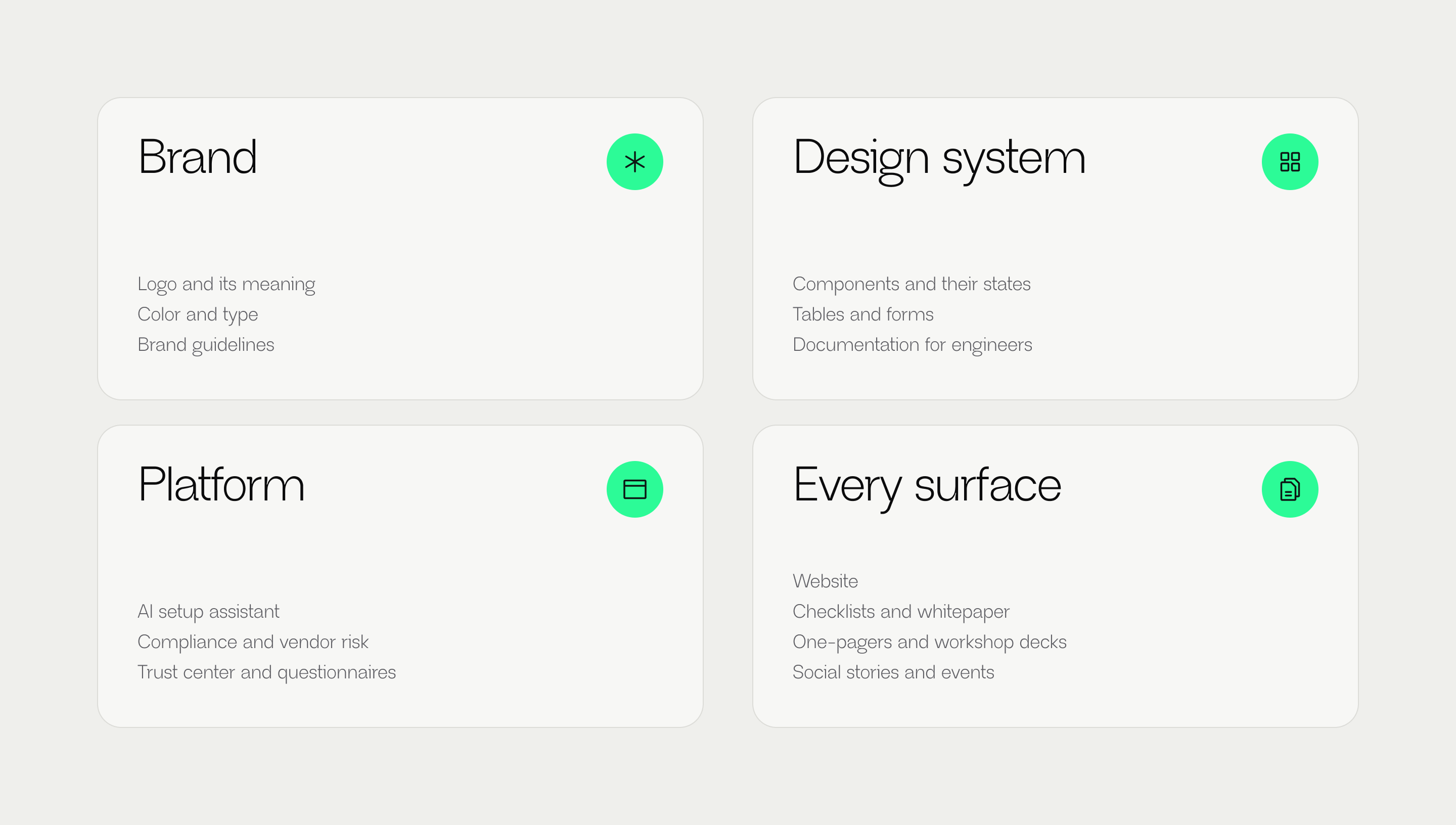
I was DSALTA's founding designer for a year, and the work ran on four tracks at once. The brand gave the company its mark, colors and type, written down in guidelines. The design system turned them into components, tables and forms, documented for the engineers who built them. The platform took the setup assistant, compliance, vendor risk and the trust center from flows to finished screens. Everything else the company put in front of people, from the website to the workshop decks, came out of the same files.
The brand
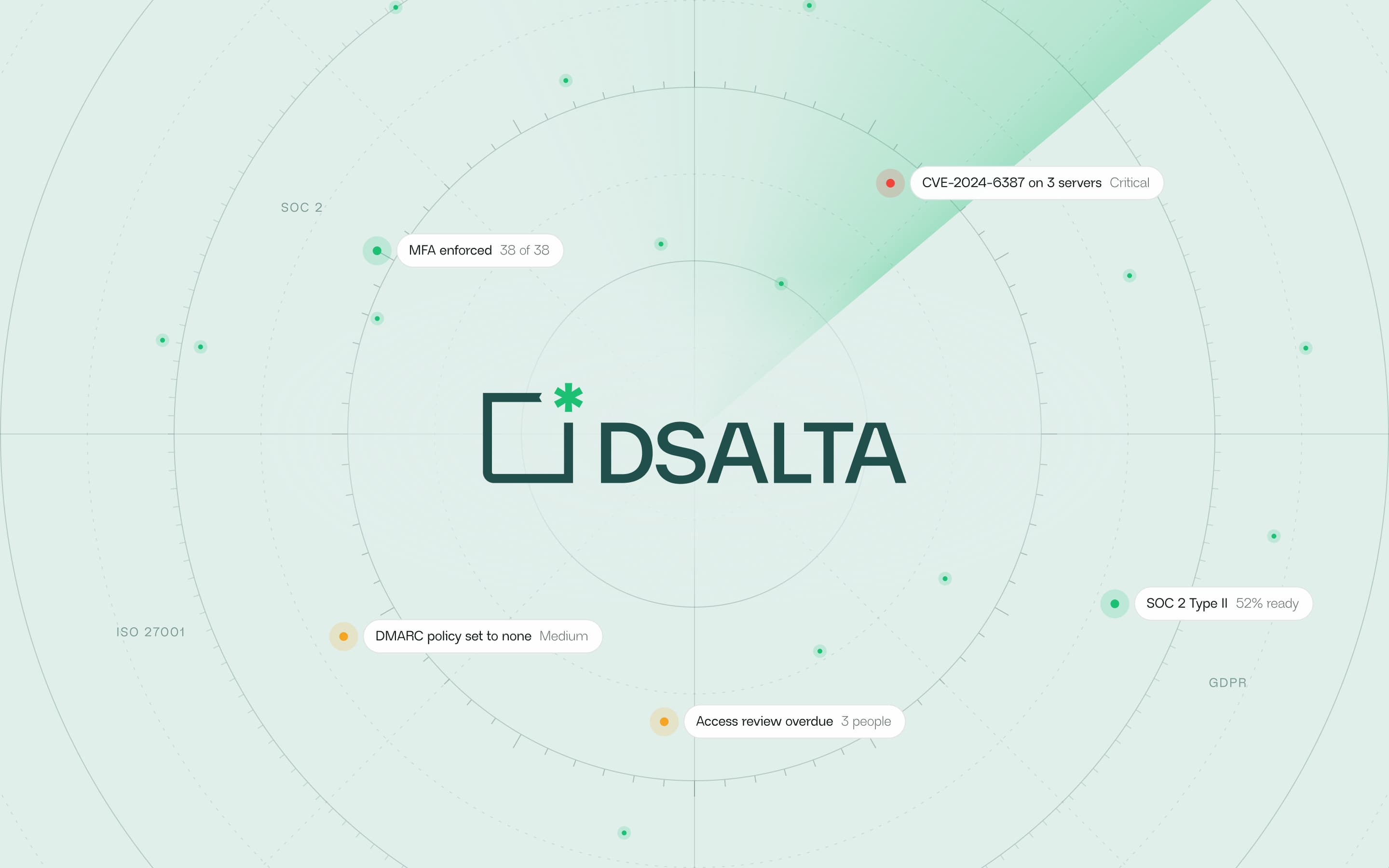
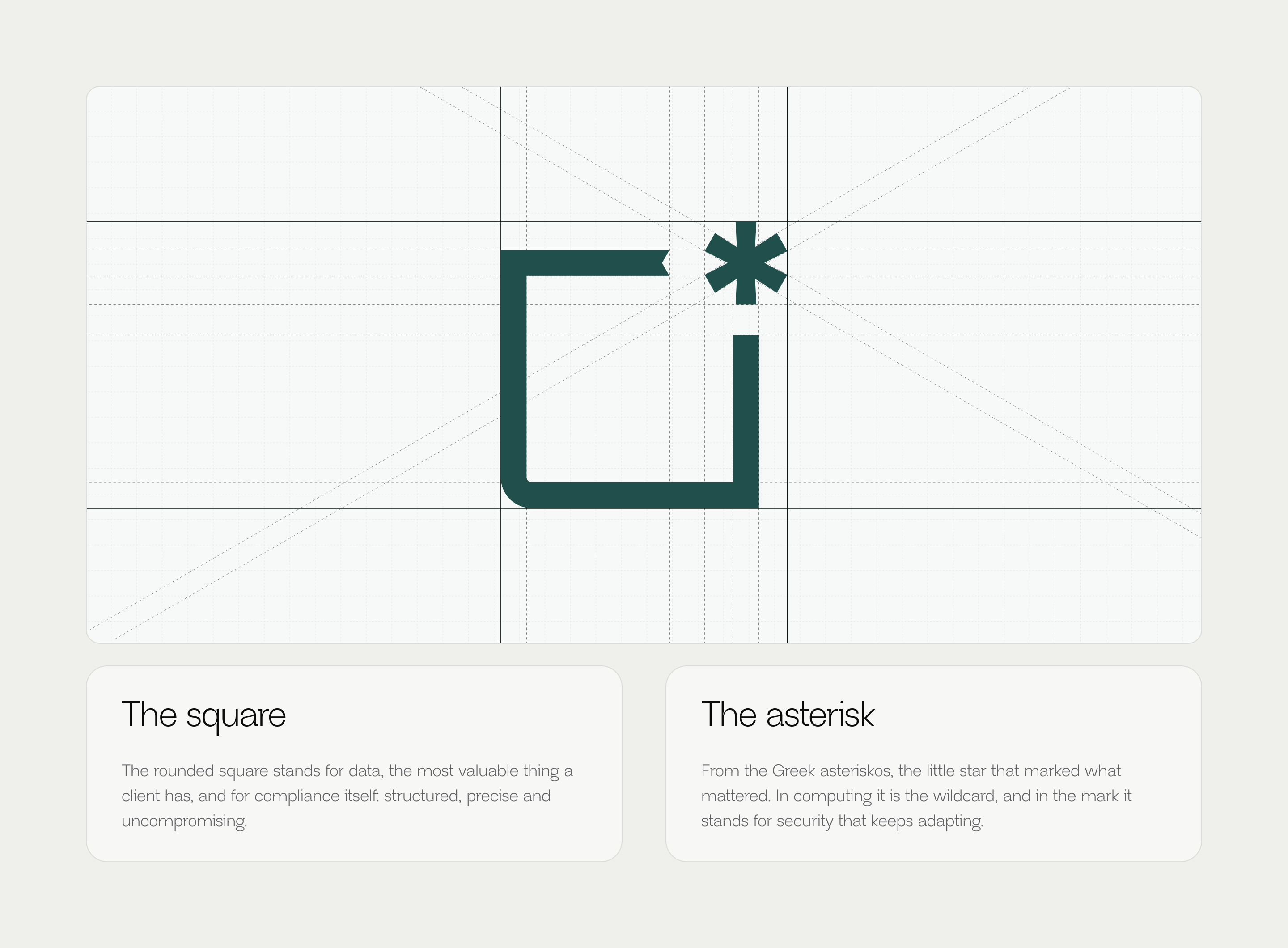
The logo joins a rounded square and an asterisk. The square stands for data, the most valuable thing a client has, and for compliance itself: structured, precise and uncompromising. The asterisk comes from the Greek asteriskos, the little star that marked what mattered in ancient texts. In computing it is the wildcard, and in DSALTA's mark it stands for security and for a system that keeps adapting as the rules change.
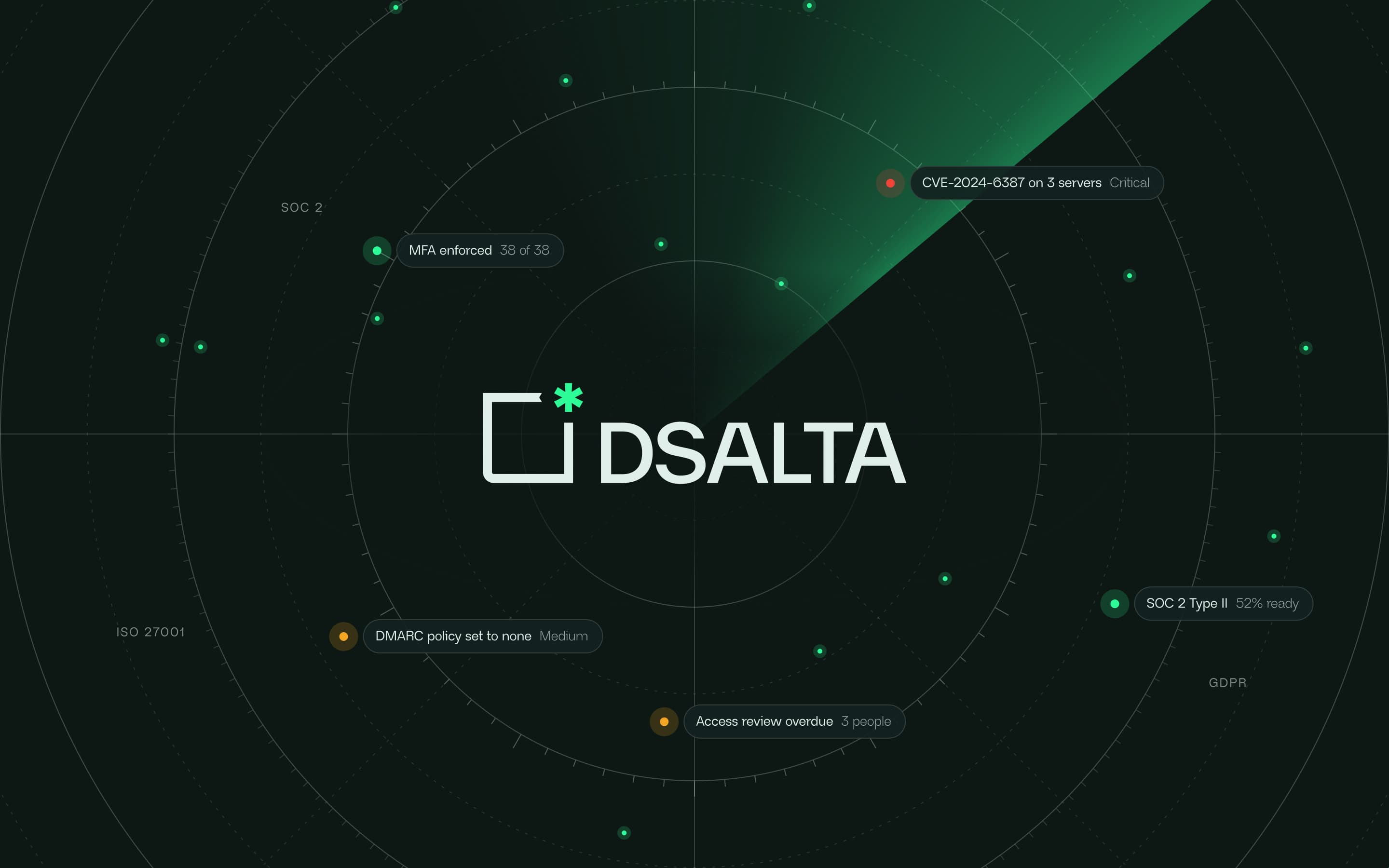
Two greens carry the brand. Dark Slate is a deep, professional green that gives the brand its stability and holds most surfaces. Spring is a bold, electric green that brings the energy and marks what matters. Emerald sits between them, and Night and Clear Day work as the brand's black and white. The typeface is Neue Regrade, a grotesk with the soft curves of gothic type and small ink traps. It keeps its character at display size and stays clear at the small sizes a dashboard needs.

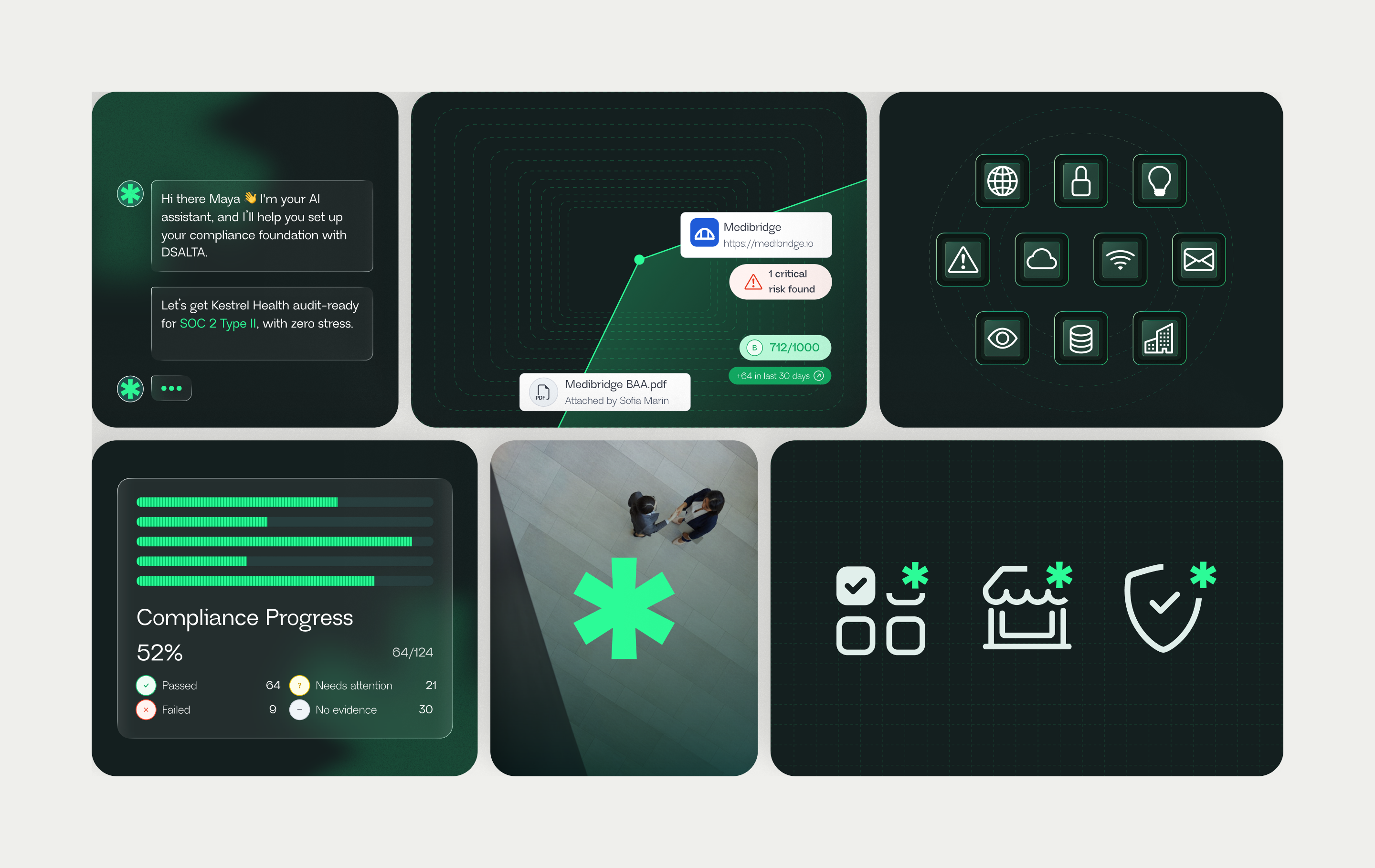
From there the asterisk carries the brand into the product. It is the face of the AI assistant, it marks the icon of every product area, and in marketing it stands in for the product itself.
Research
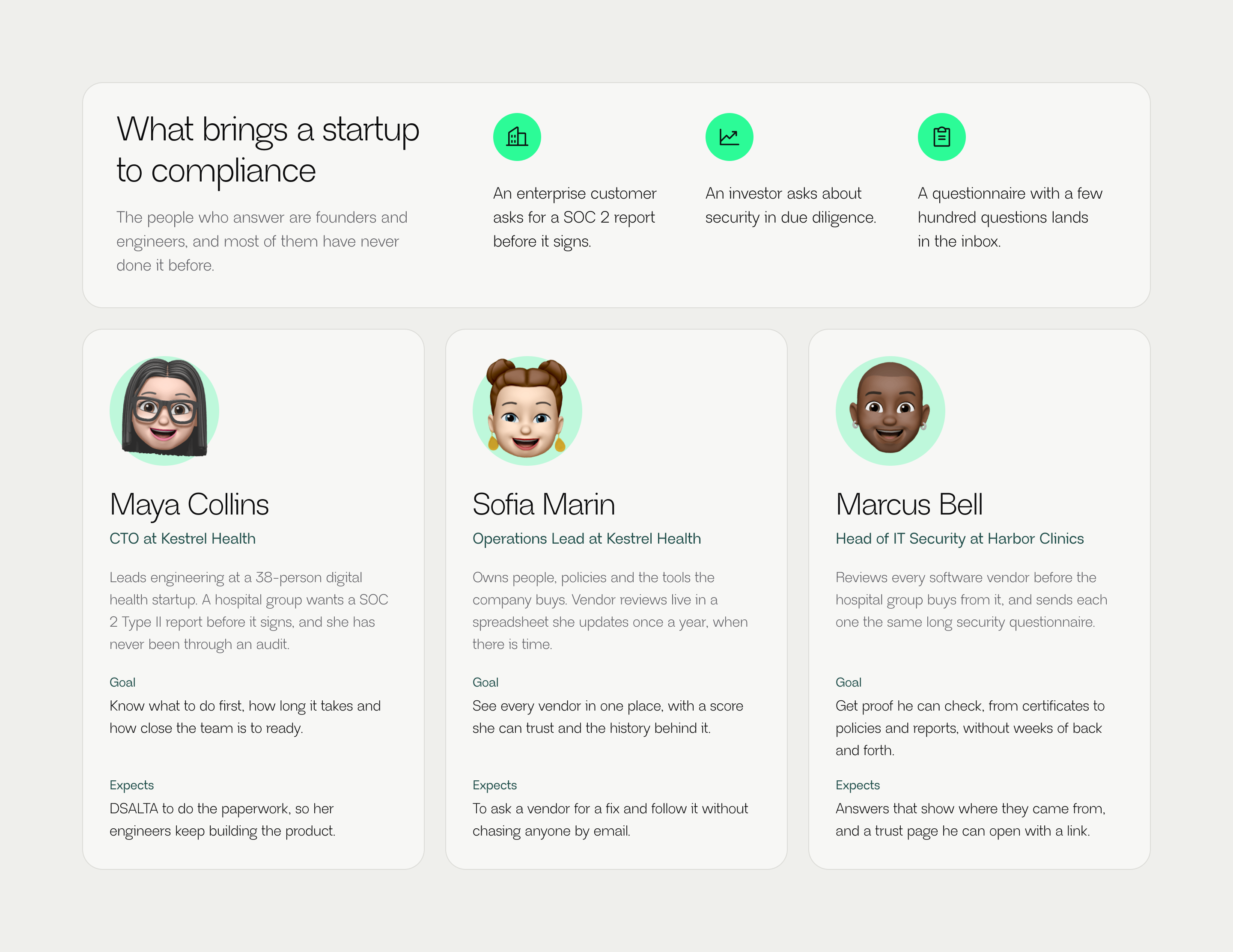
Startups come to DSALTA when a deal depends on it. An enterprise customer asks for a SOC 2 report before it signs, an investor asks about security in due diligence, or a questionnaire with a few hundred questions lands in the inbox.
We designed for three people. A startup's CTO who has never been through an audit and wants to know what to do first and how long it takes. The operations lead who owns the vendors and keeps their reviews in a spreadsheet. And on the other side of the deal, the head of IT security at the customer, who wants proof he can check without weeks of back and forth.
The architecture
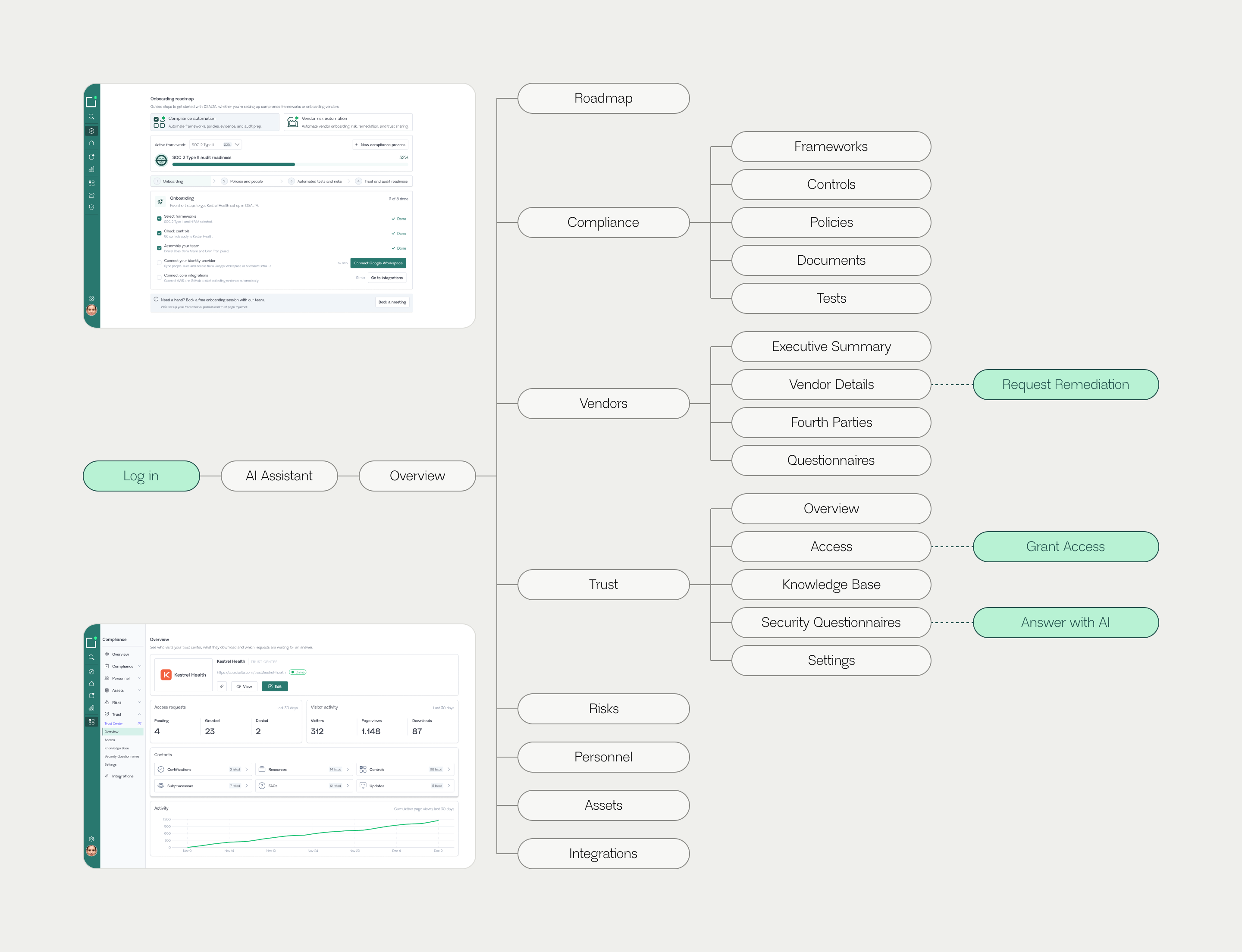
Everything hangs off one overview. Compliance holds the frameworks, controls, policies, documents and tests. Vendors hold an executive summary, every vendor's page with its fourth parties and questionnaires, and the remediation requests that start from it. The trust center holds the public page, access to it, a knowledge base and the security questionnaires customers send. Risks, personnel, assets and integrations sit beside them, and a new team reaches all of it through the setup assistant.
The platform
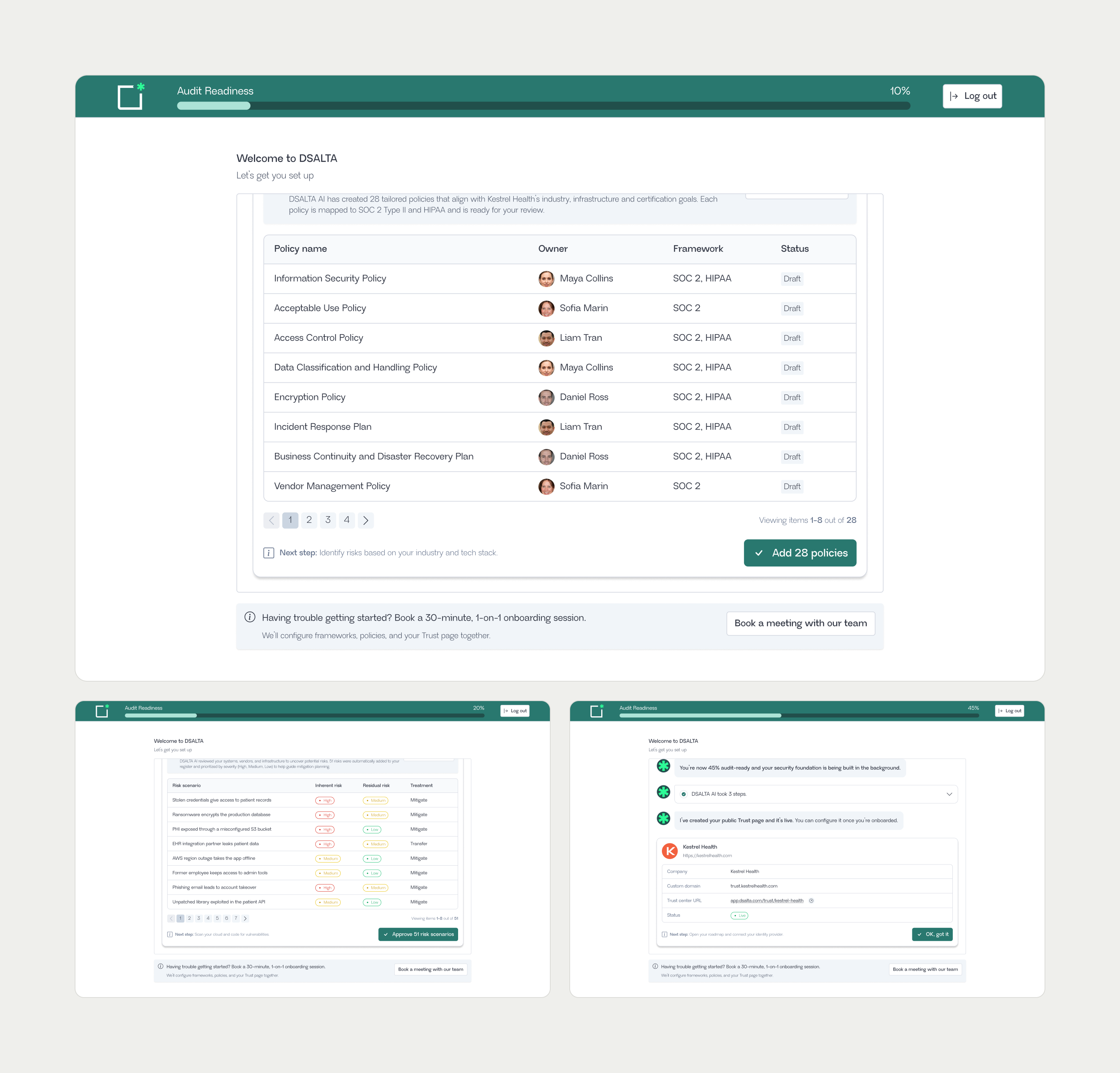
A new team does not start on an empty dashboard. An AI assistant asks a few questions about the company, the data it holds, where that data lives and the tools it runs on, then does the first weeks of work in the background. It drafts the policies, scores the risks that fit the company, scans its cloud for vulnerabilities, finds the vendors it already uses and publishes a trust page. Each step ends with a short summary and one button to approve it, and the audit readiness bar at the top fills as the team goes.
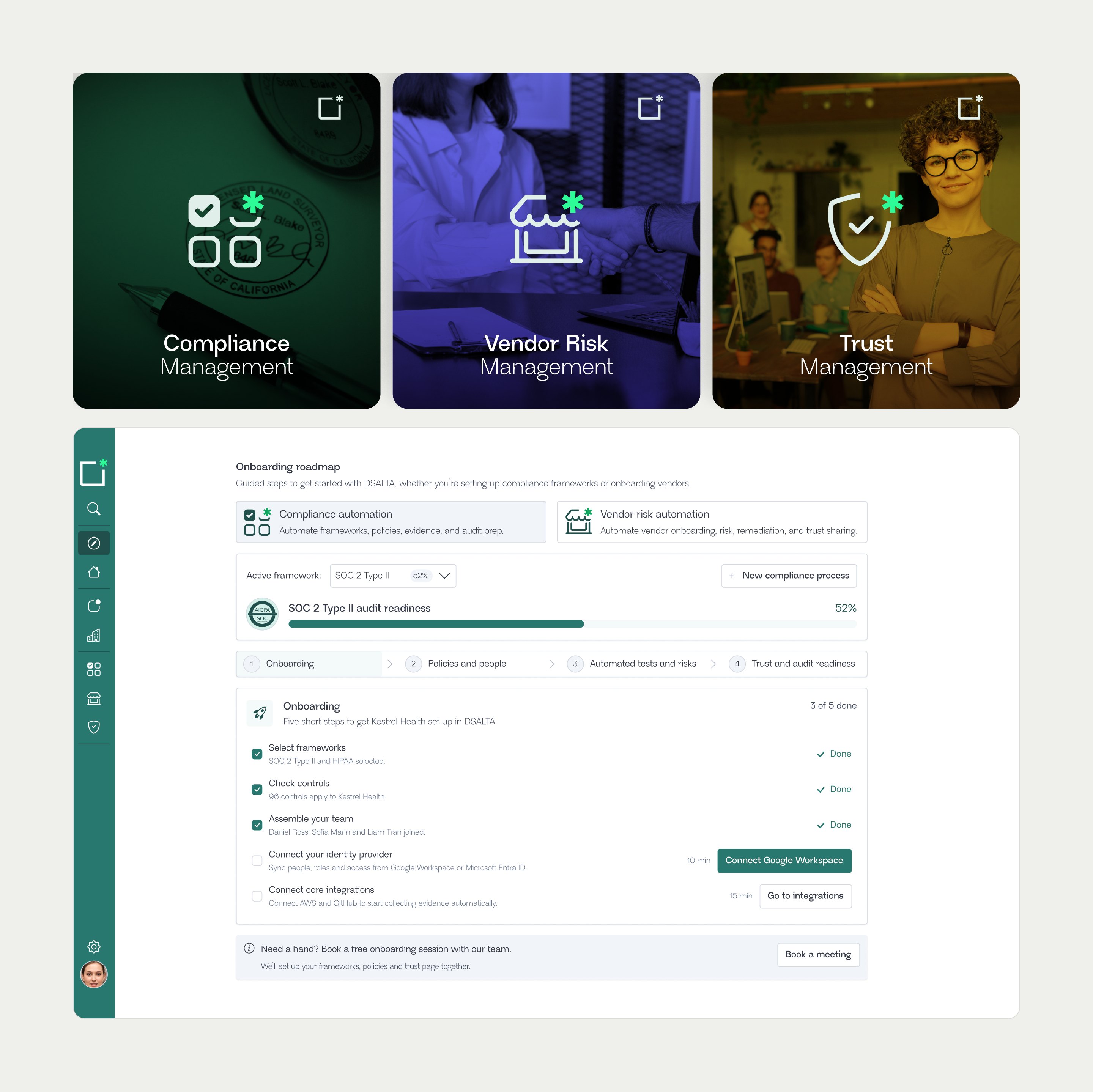
When the assistant is done, the roadmap takes over. It shows how close the team is to audit readiness and splits the rest of the work into four stages. Every task says why it matters and how long it takes, and only the next one is a button. The work itself lives in three areas, compliance, vendor risk and a trust center, each with its own icon drawn from the logo's square and marked with its asterisk.
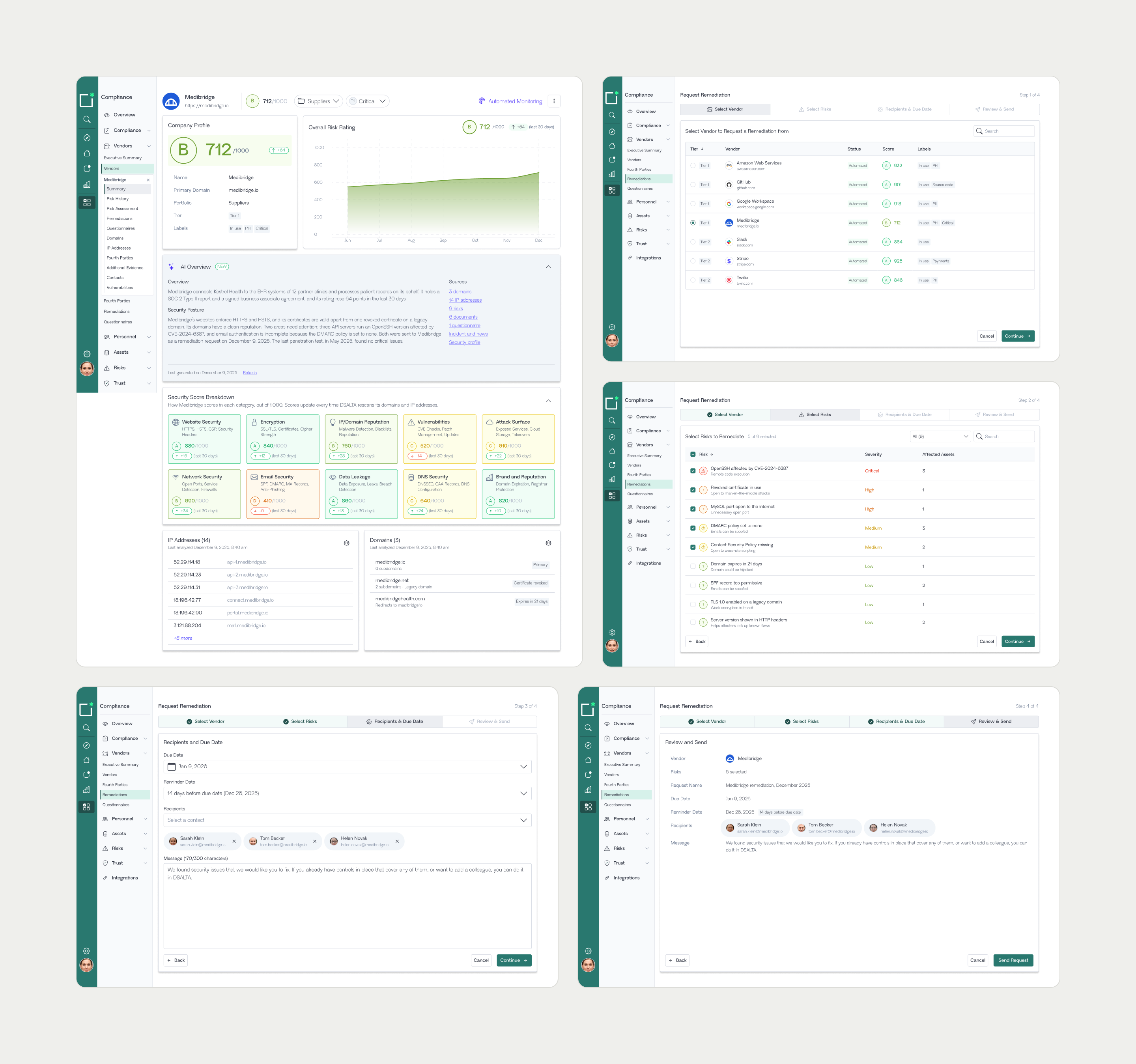
Vendors get the same plain reading. Each one has a security rating out of 1,000 with its trend over the months, and an AI overview says in a few sentences what the vendor does for the company, where it is strong and what needs attention, with the sources behind it. When a finding needs fixing, the request goes to the vendor's own people from the same place, in four steps: the vendor, the risks, the people and the due date, and a last look before it is sent.
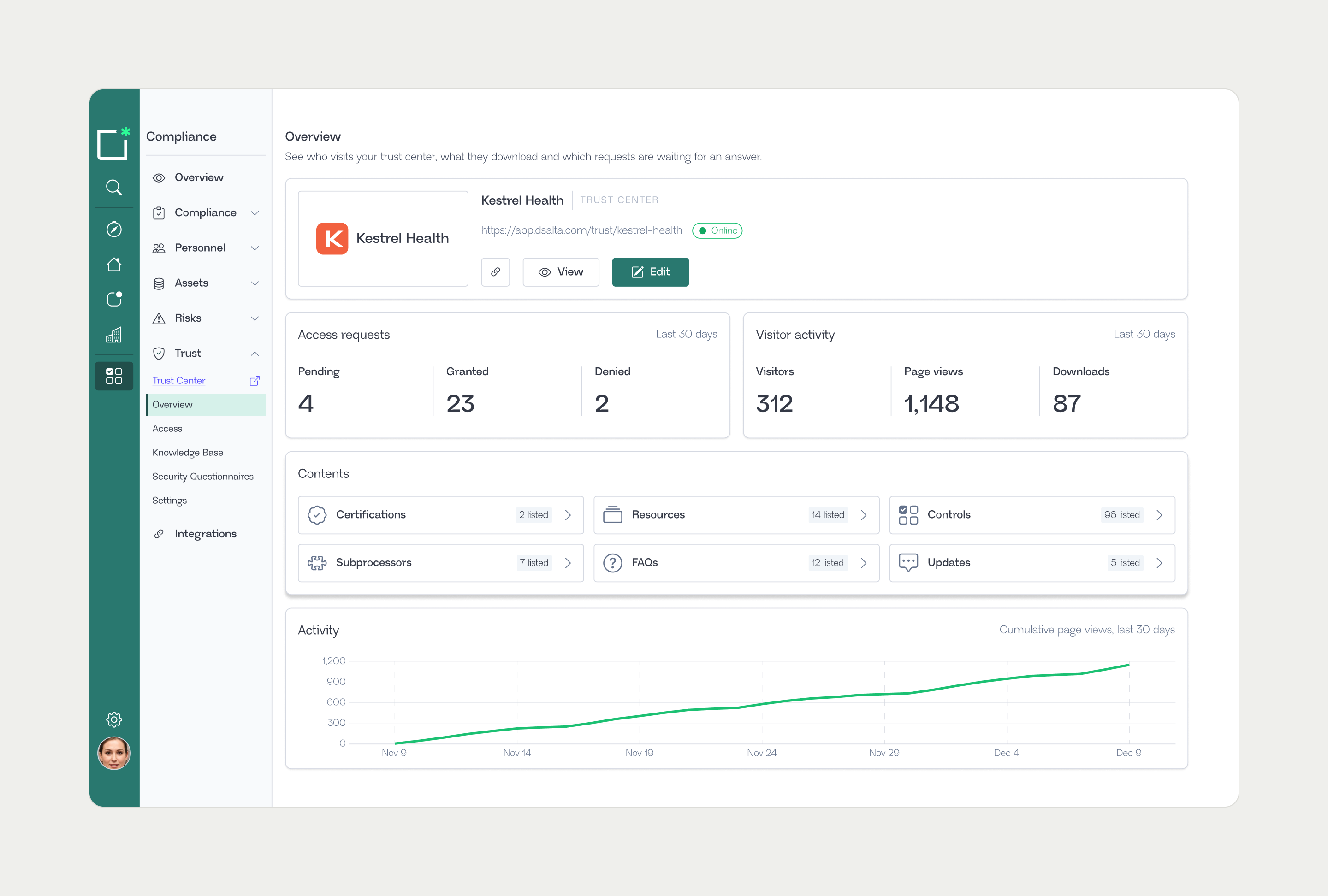
The trust center is where the work turns into proof. A company shows its certificates, policies and reports on one public page, decides what is open and what is on request, and sees who visited and what they downloaded. When a customer asks for the SOC 2 report, the answer is a link.
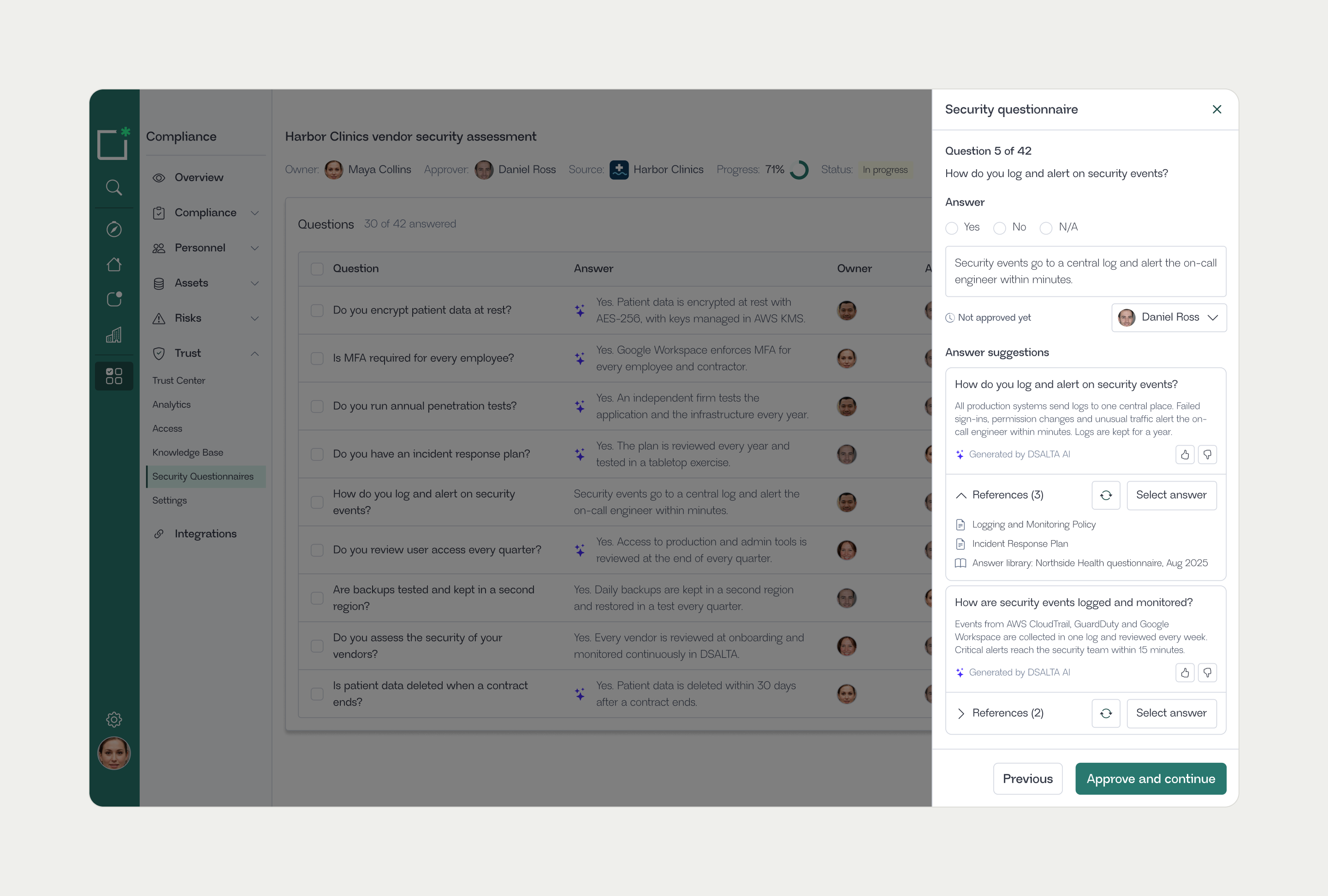
Security questionnaires are answered in the same place. DSALTA AI drafts each answer from the company's policies and earlier answers, shows where it came from, and a person approves it before it goes back to the customer.
One system, every surface
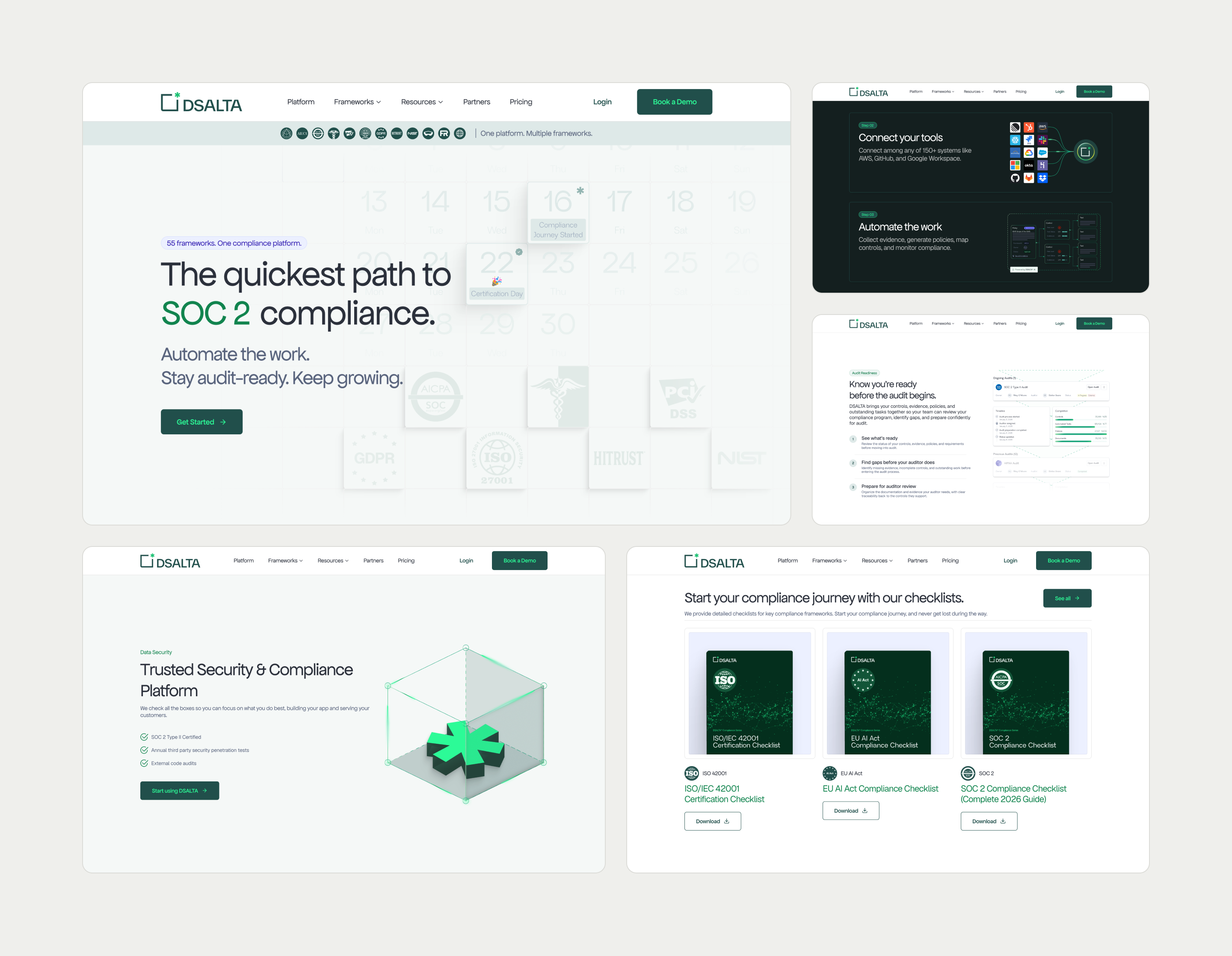
The same greens and the same asterisk run through everything the company puts in front of people. The website explains the product with pieces of its own interface.
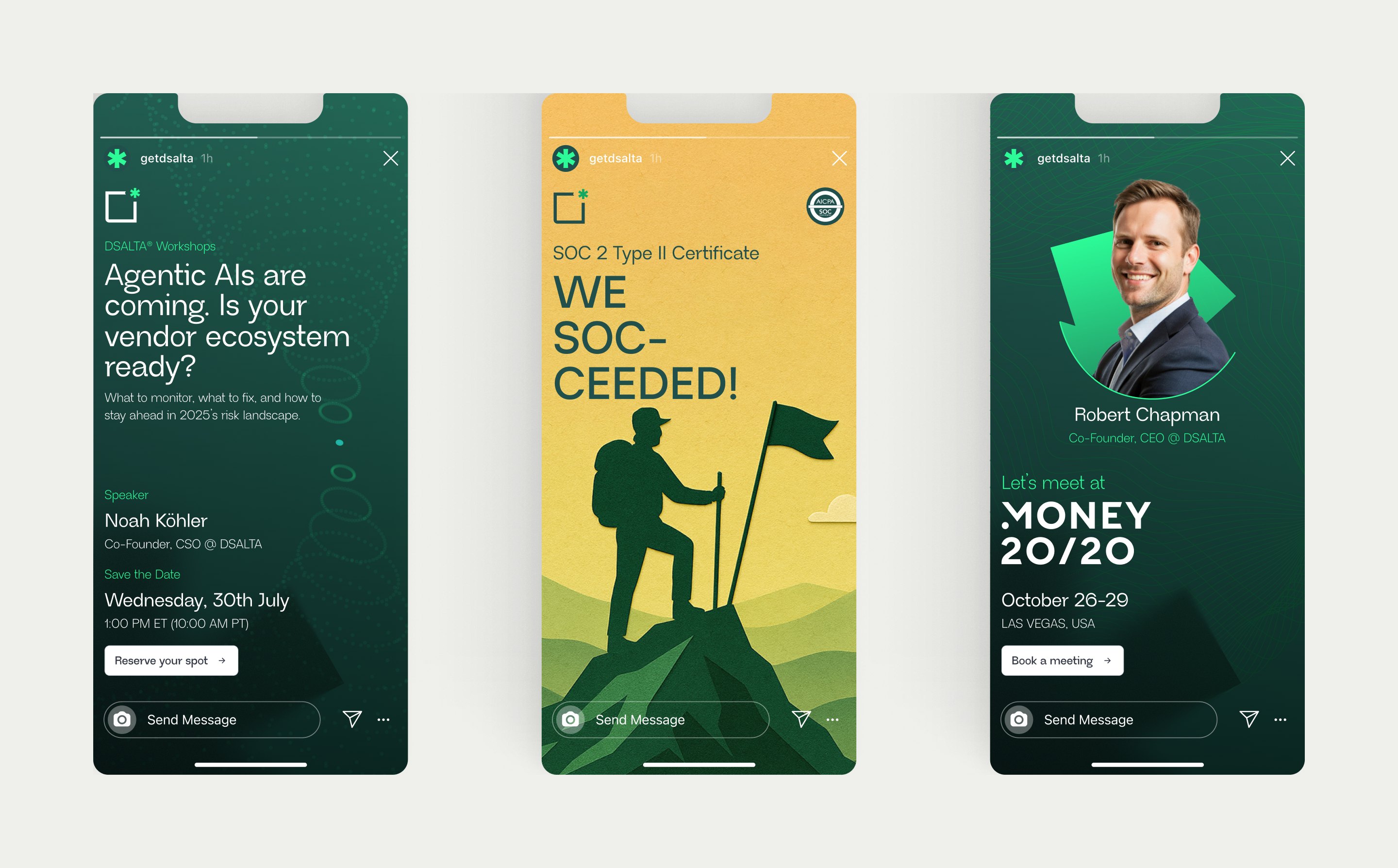
Social stories and event invitations come from the same files.
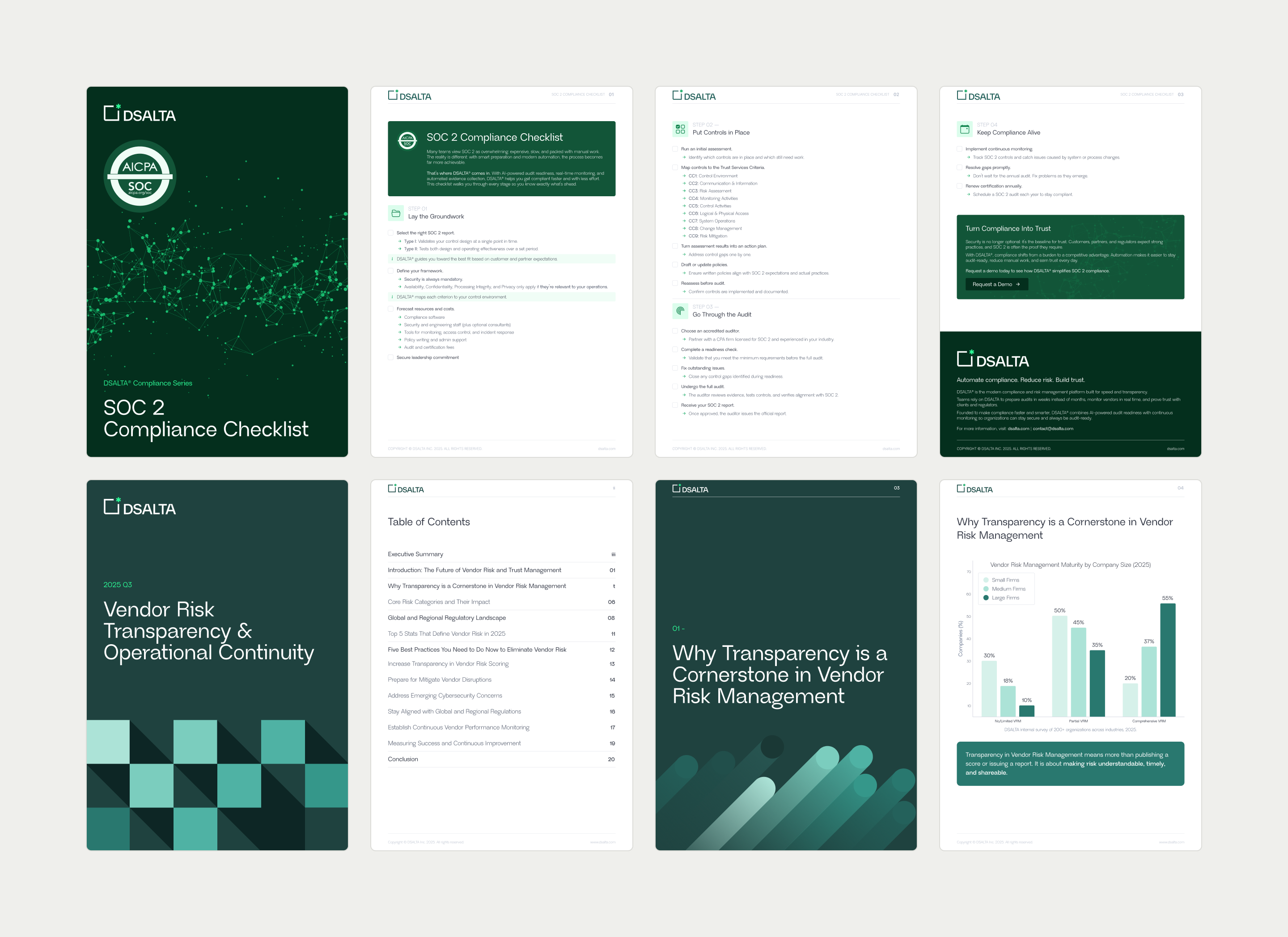
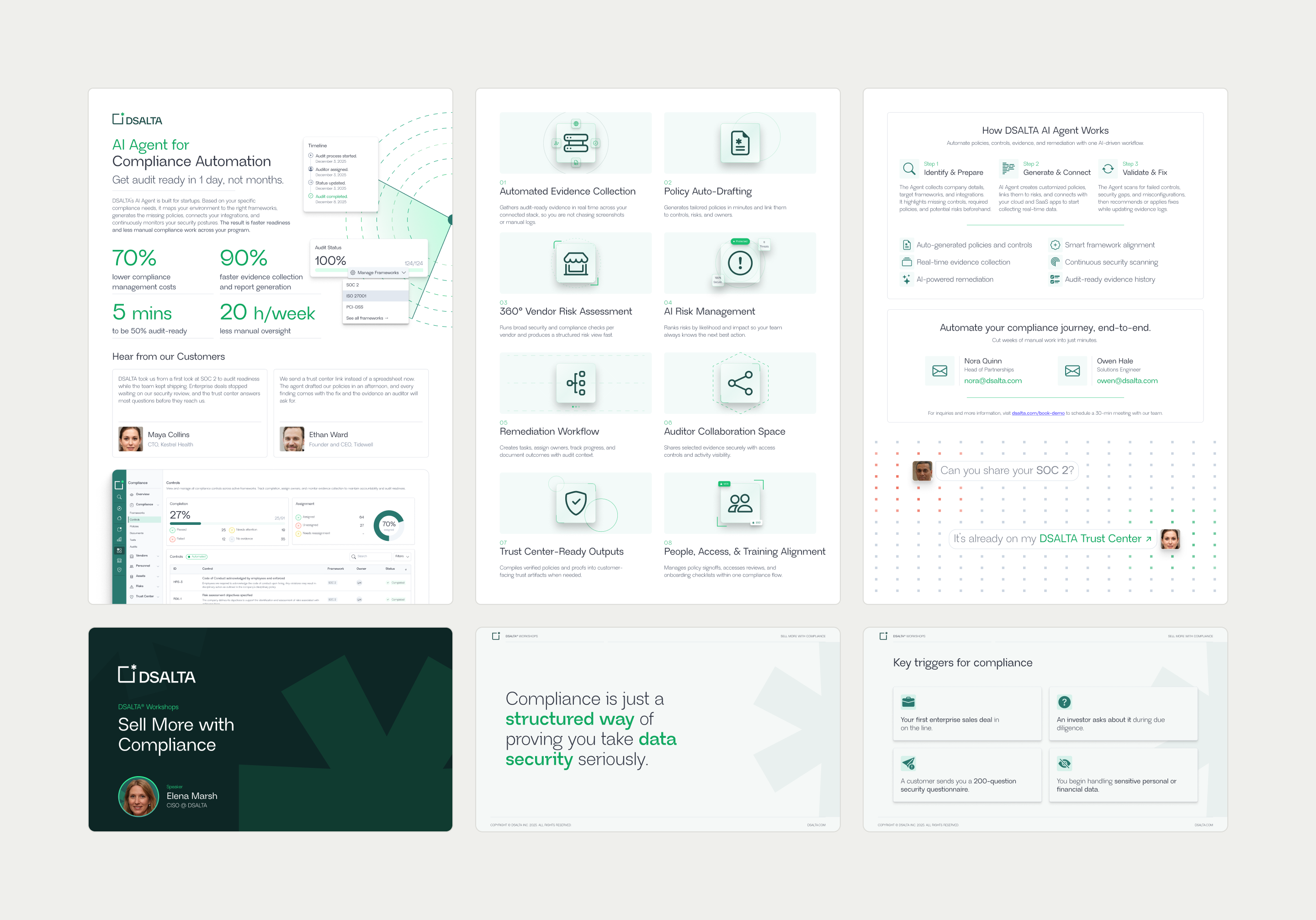
A series of framework checklists starts with SOC 2, and a whitepaper on vendor risk lays out the thinking behind the product.
One-pagers go into sales conversations, and the workshop decks walk startups through what compliance asks of them.
Outcome
In its first year DSALTA reached more than 60 paying customers. It is now a familiar name in the sector, and event organizers invite it as a collaborator.
Customers recommend it in their own words. One startup CEO chose it for its "unmatched speed and precision in achieving SOC 2 compliance". Another team reached SOC 2, ISO 27001 and GDPR readiness "while our team kept building product".
No other platform comes close to its unmatched speed. We secured our SOC 2 attestation report in just a couple of weeks, thanks to DSALTA and its partners.
I was DSALTA's founding designer, and the product and the brand these customers talk about started as one system.