Sales Engine
From an address to a solar proposal in one web app
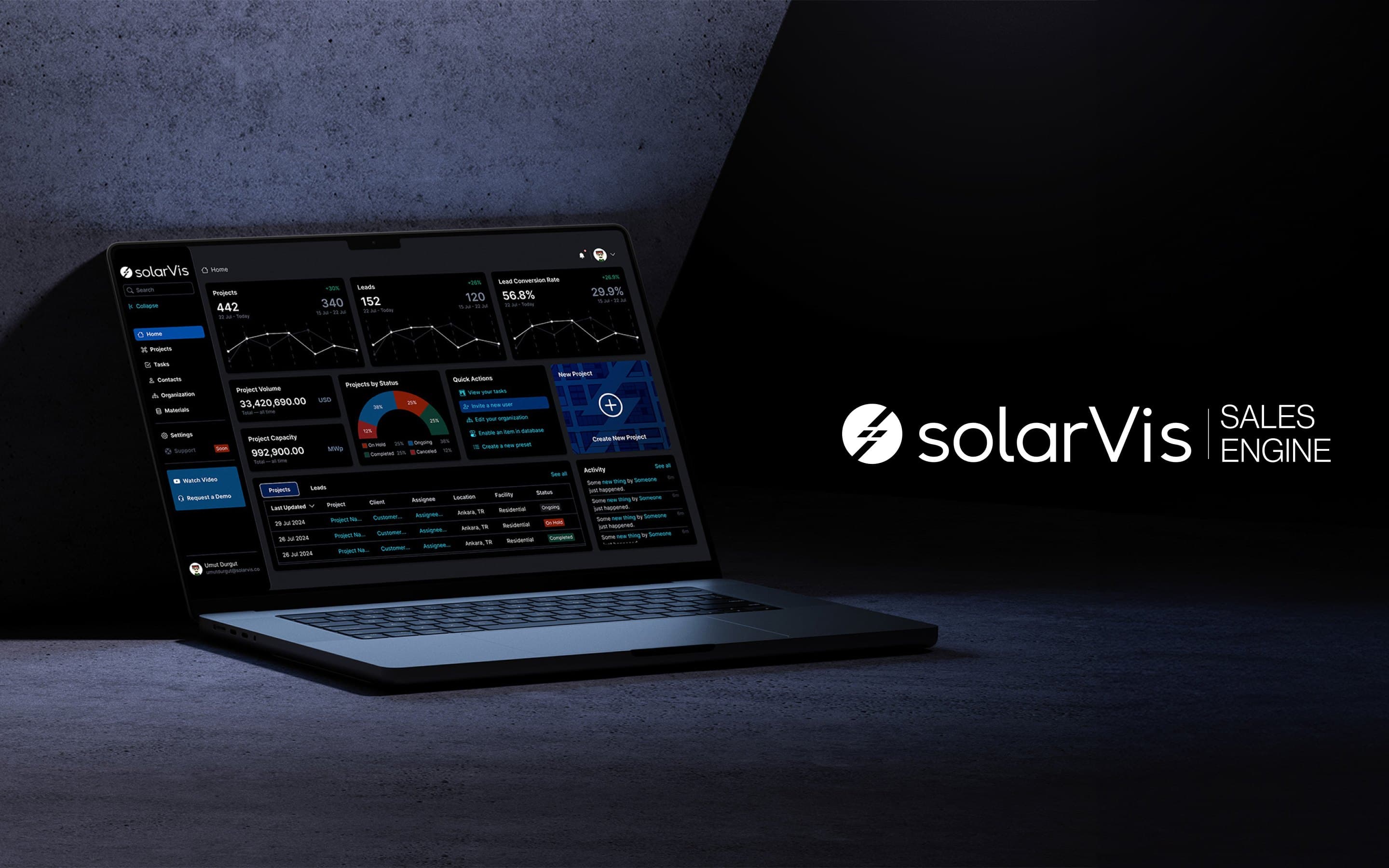
Sales Engine is solarVis's web app for solar installers. A sales team goes from a customer's address to a branded proposal in one place: the 3D rooftop design, the materials, the financials and the customer. I was its founding designer, and I designed the solarVis brand around it.
- Year2024
- ClientsolarVis
- RoleProduct Designer
- ScopeResearch, web app, brand, website and marketing
- Built WithAdobe Illustrator, Adobe InDesign, Adobe Photoshop, Figma, Webflow
- Livesolarvis.co (opens in a new tab)
In one line
I designed Sales Engine so a solar salesperson with no CAD experience can turn a customer's address into a branded proposal in one sitting.
The problem
Solar installers sold with tools built for engineers. A rooftop was designed in desktop software like PVSOL and PVsyst, the price was worked out somewhere else, and the customer, the materials and the team lived in other places again. One proposal could take hours to prepare, and every hour of delay was a chance to lose the deal.
Sales Engine brings that work into one web app. A sales team designs the roof in 3D, picks the materials, sees the financial forecast and sends a proposal under its own brand, within minutes.

How it was built
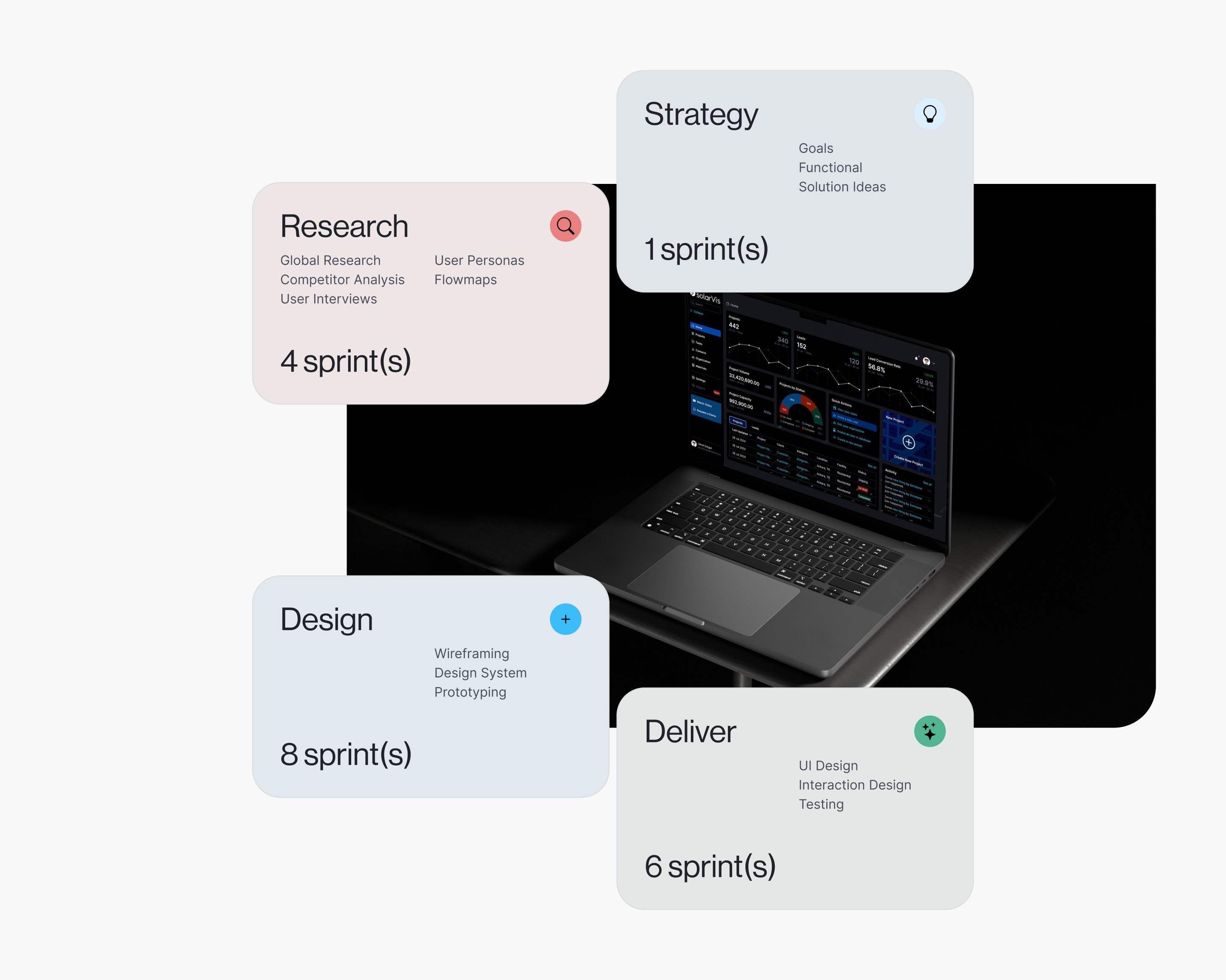
I was the designer and researcher on the project, working with the solarVis engineering team from October 2023 to August 2024. The work ran in four stages. Strategy set the goals and the functional scope. Research covered the market, the competitors and interviews with installers, and turned them into personas and flow maps. Design moved from wireframes to a design system and prototypes, and delivery finished the interface and its interactions and tested them with users.
The brand
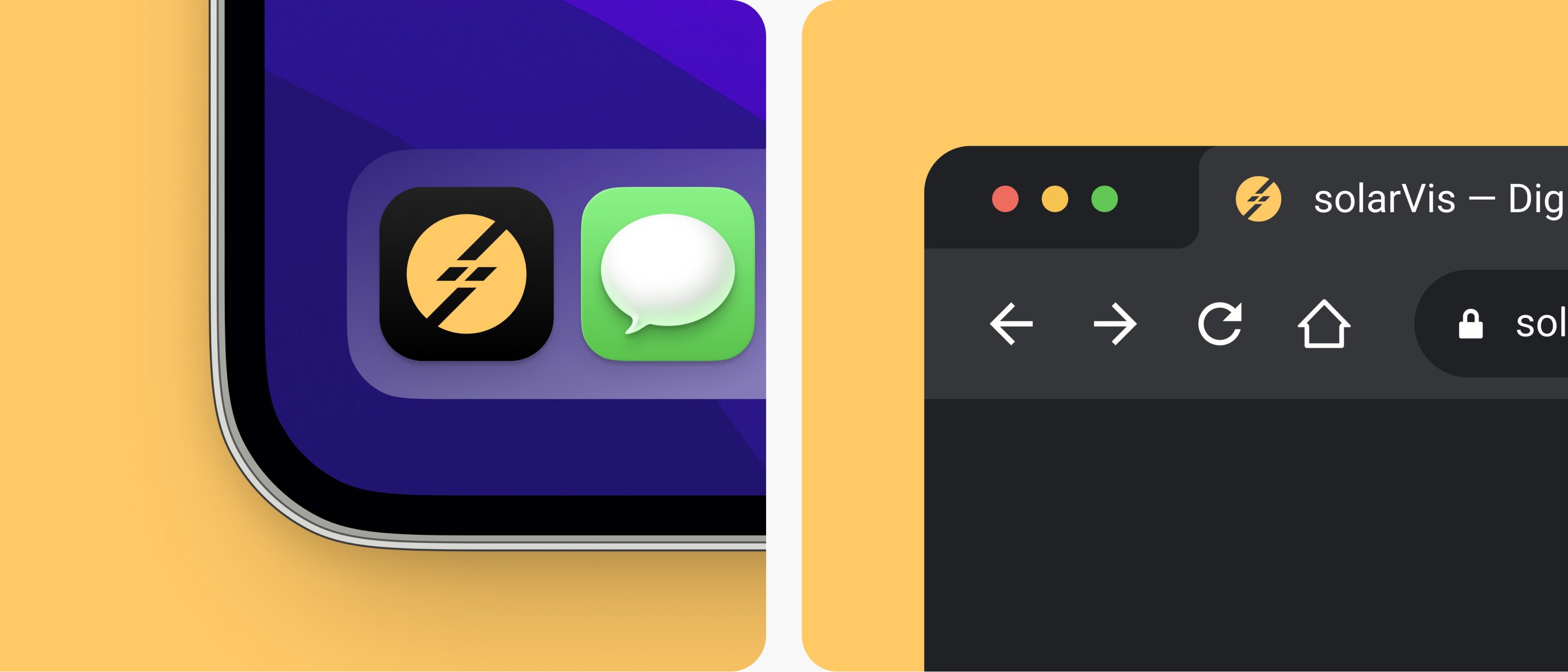
The product carries the solarVis identity, which I designed alongside it. The mark is a circle with a detached S, and it stands for solar energy, sustainability and the company's drive to innovate in renewables. It has to hold at every size, from an app icon in a dock to the back of a hoodie.
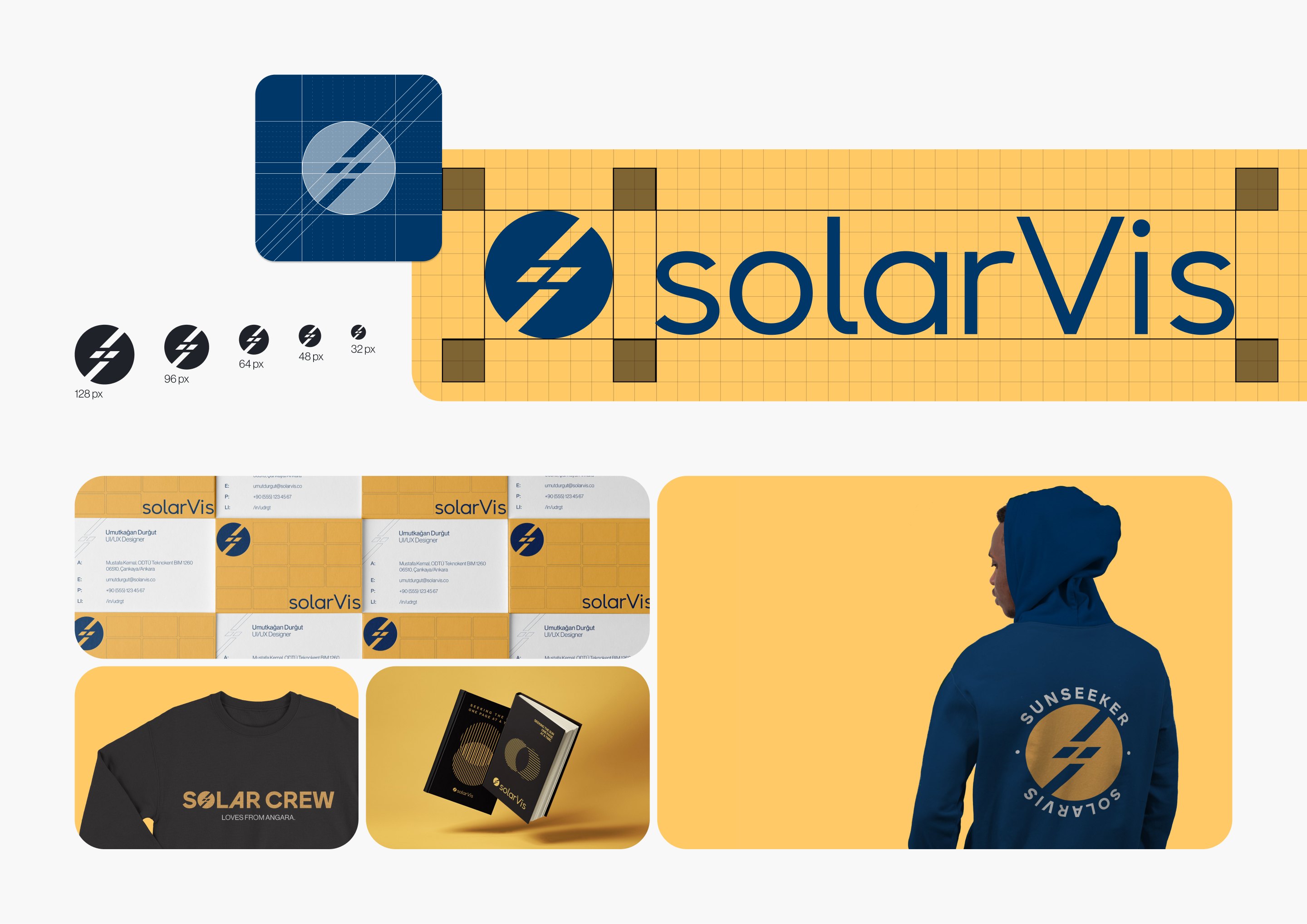
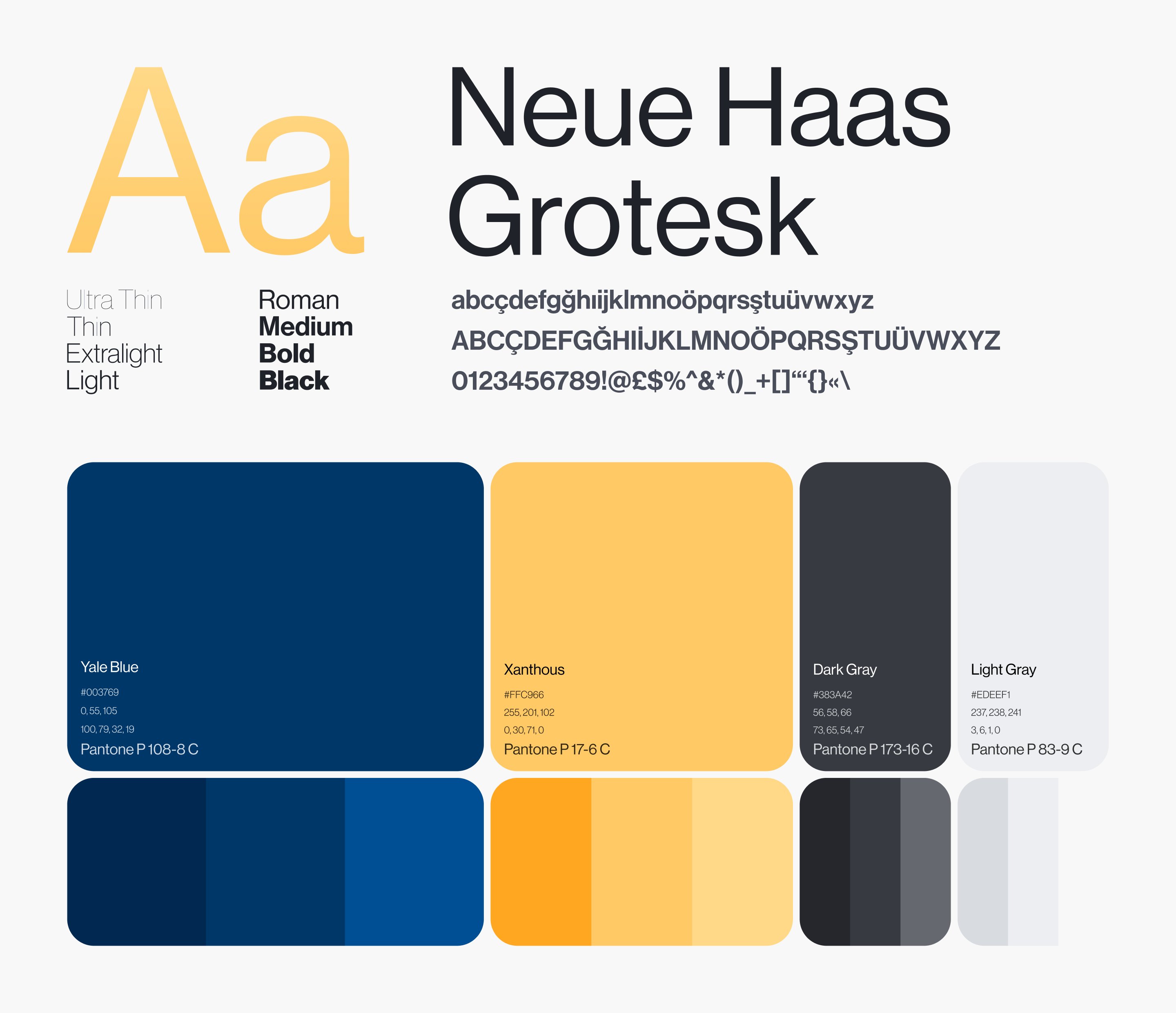
The palette pairs a deep blue that brings trust with a yellow that brings the warmth of the sun, and two grays carry the interface. Neue Haas Grotesk sets everything from the product to print, in weights from Ultra Thin to Black.
Research
Research started with the tools installers already compared: Aurora, Solo, Eturnity and Ezzing on the web, PVSOL and PVsyst on the desktop. The gaps were customization and ease of use, so we set a bar of our own. A salesperson with no CAD experience should be able to design a roof alone.
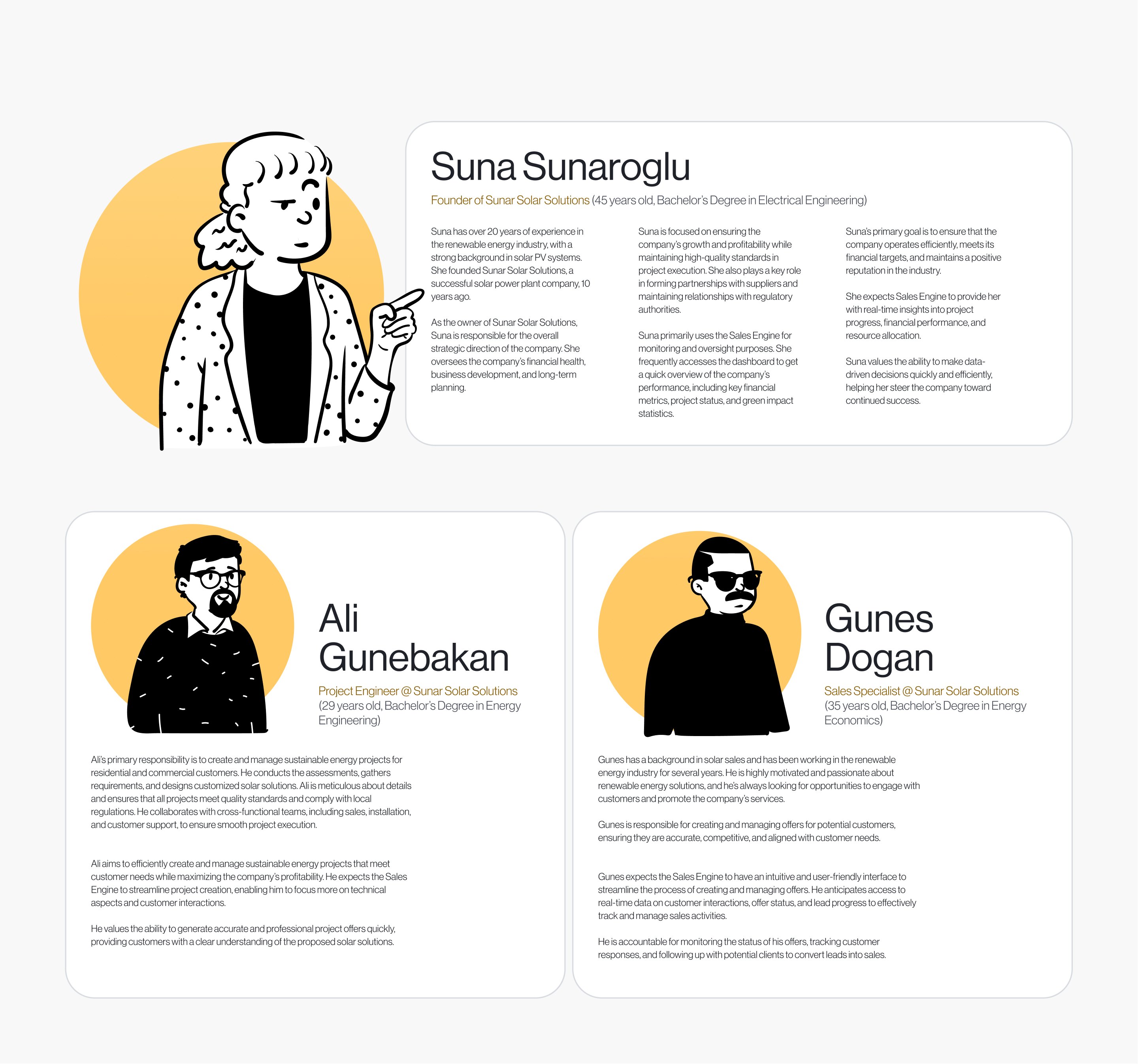
The interviews gave us three people who want different things from the same project. The founder watches revenue, project status and the environmental impact the company can show its customers. The project engineer needs proposals that are accurate and professional, and fast. The sales specialist creates the offers and chases them, and needs to see where every customer and quote stands.
The architecture
Everything hangs off one dashboard with five areas: projects, leads, tasks, contacts and the organization with its teams and partners. Settings hold what makes the tool the installer's own, from the company, users and billing to material presets, solar packages, project steps and the proposal template.
A new project runs through seven steps: project information, consumption, site modeling, the PV system, sustainable solutions, the bill of materials and a summary that prints as the proposal.

The web app
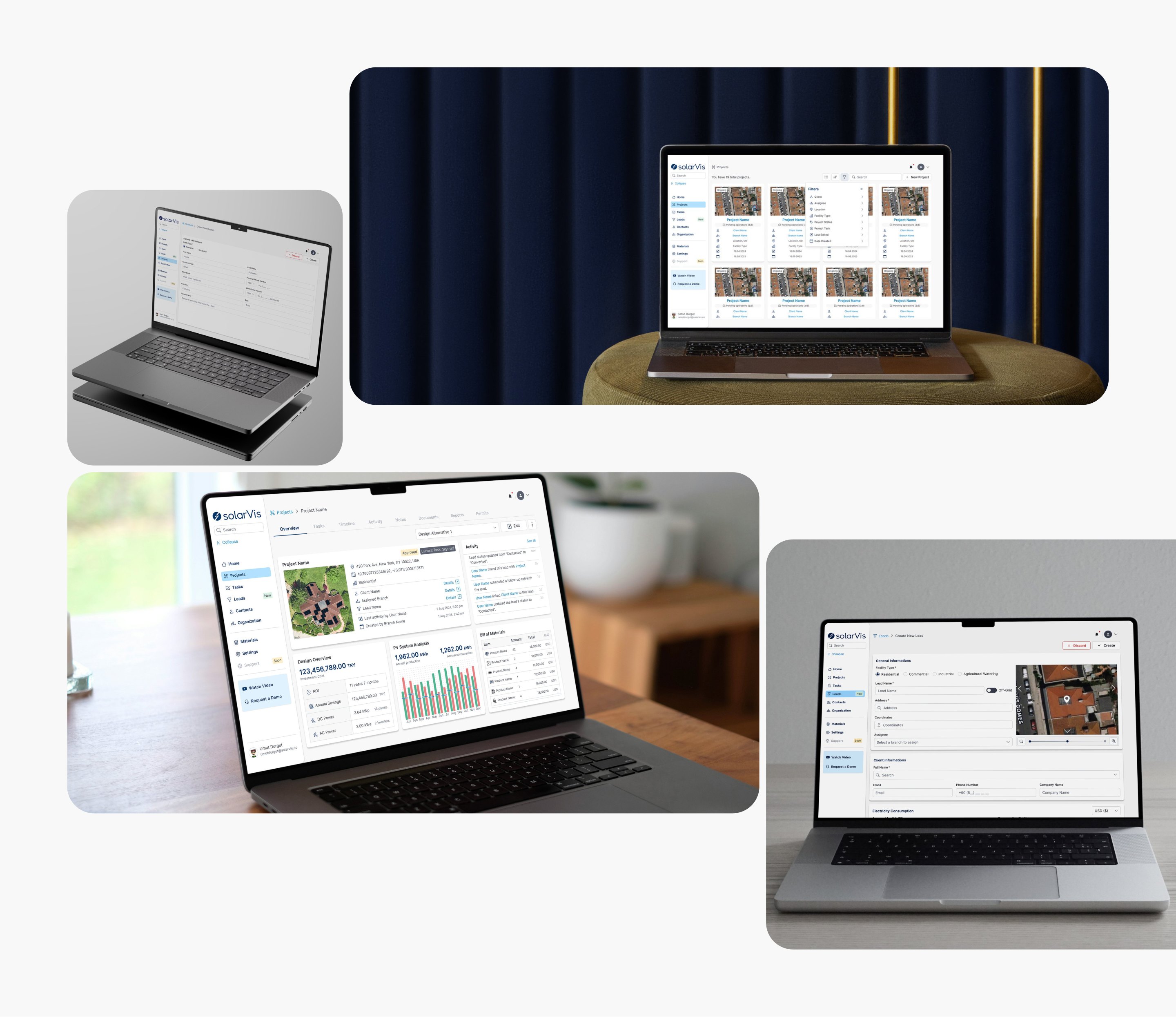
The dashboard opens on the numbers a sales team lives by: projects, leads, conversion, volume and installed capacity, with a new project one click away.

Every lead and project belongs to one contact, so a salesperson can log a call, plan a follow-up or attach a permit without leaving the customer. A project keeps its design alternatives side by side, each with its own investment, payback and bill of materials.
Installers work from a database of more than 90,000 industry items. They switch on what they stock, set their prices and save packages for the systems they sell most, and a missing item can be requested from inside the flow. Each line of a package can be shown or hidden in the quote, and counted in the feasibility or left out of it.
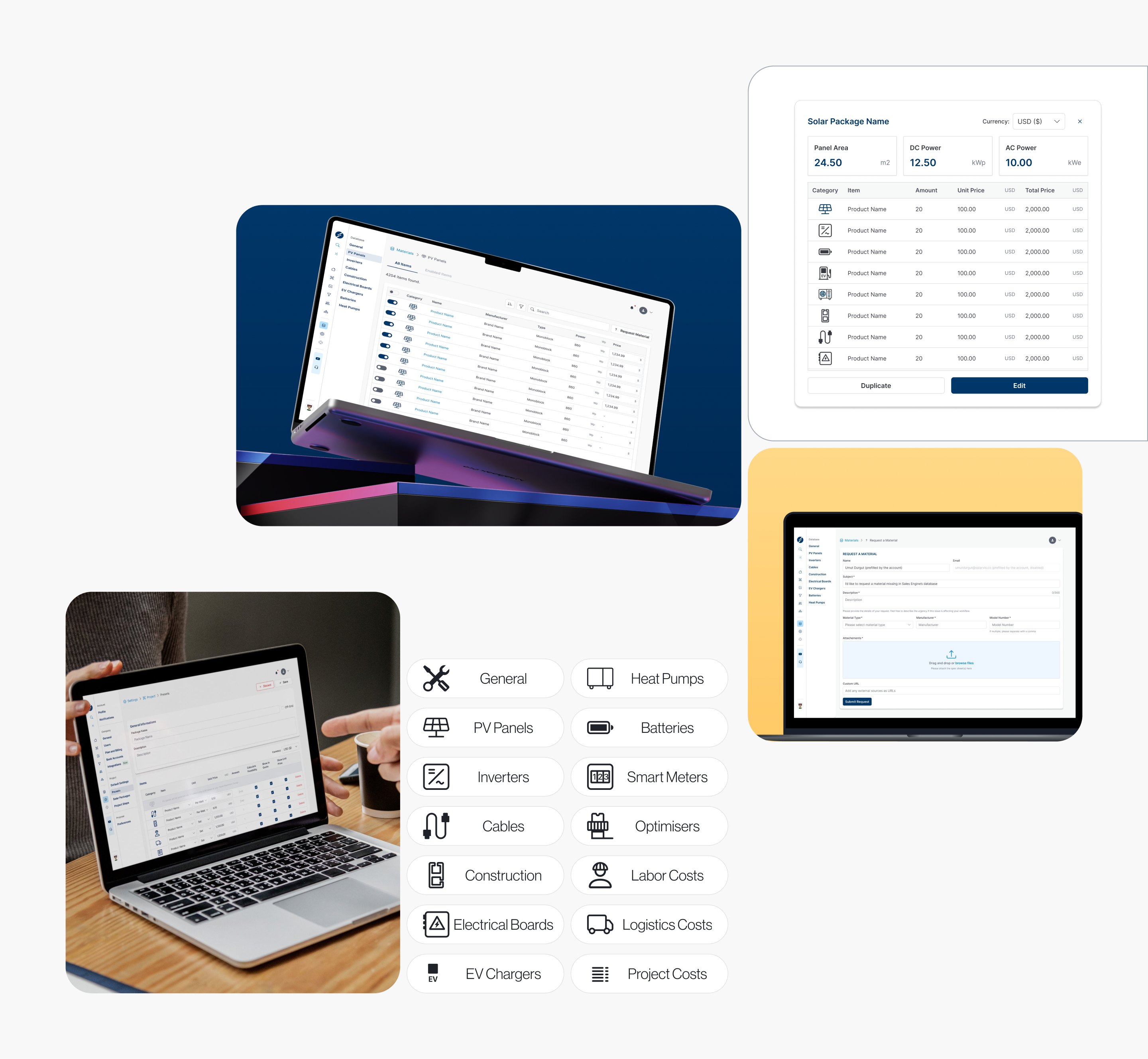
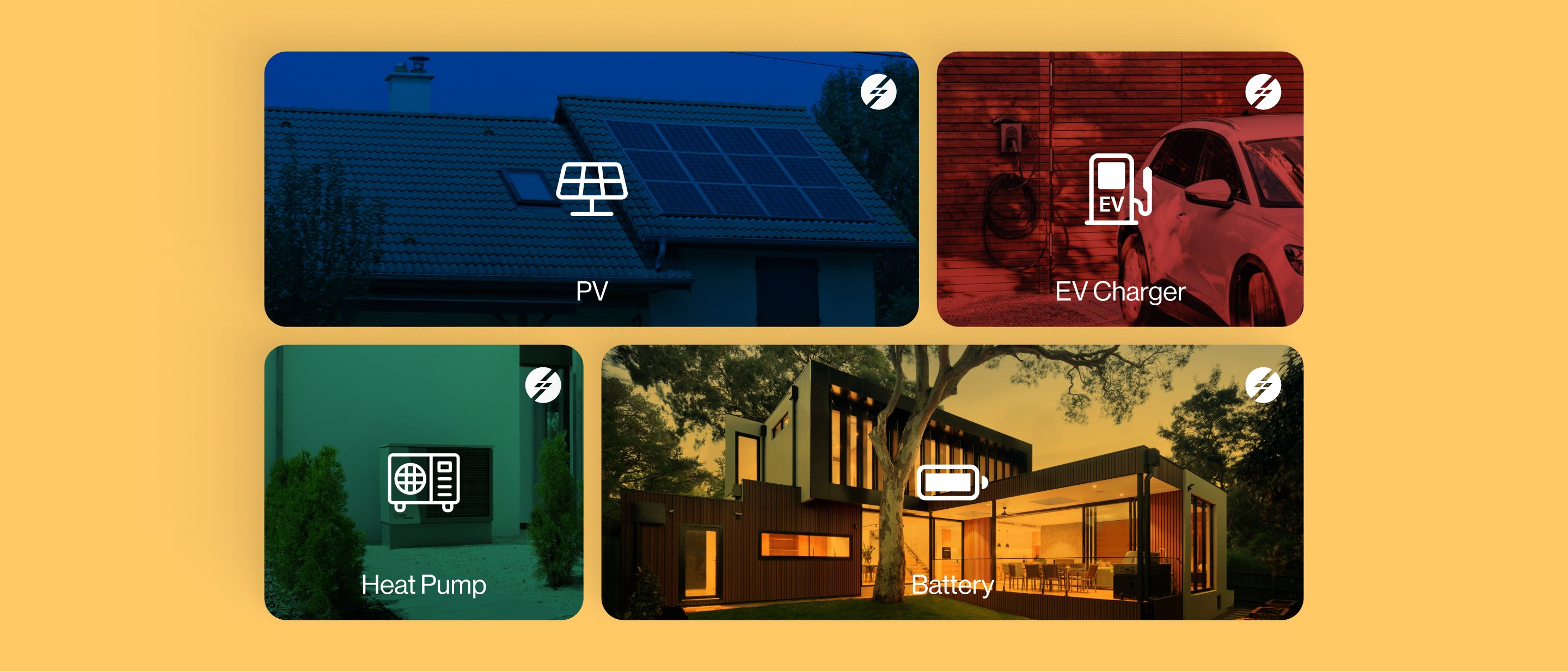
The four things an installer sells through it, solar panels, EV chargers, heat pumps and batteries, each have their own image and icon.
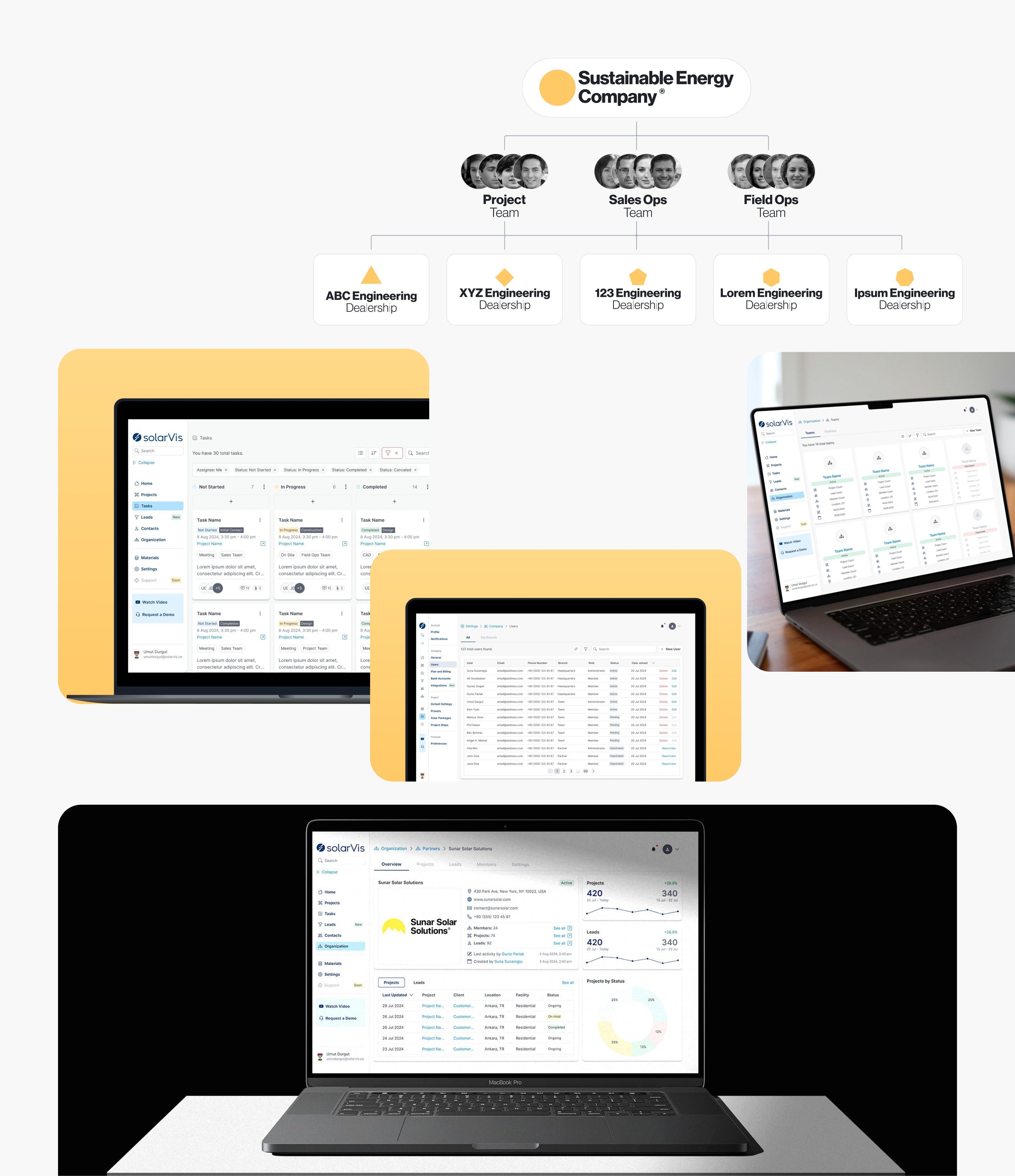
Solar companies sell through teams and dealer networks. The organization area models that structure, from the company to its teams and dealerships, with a task board for the work in between and user settings for who sees what.
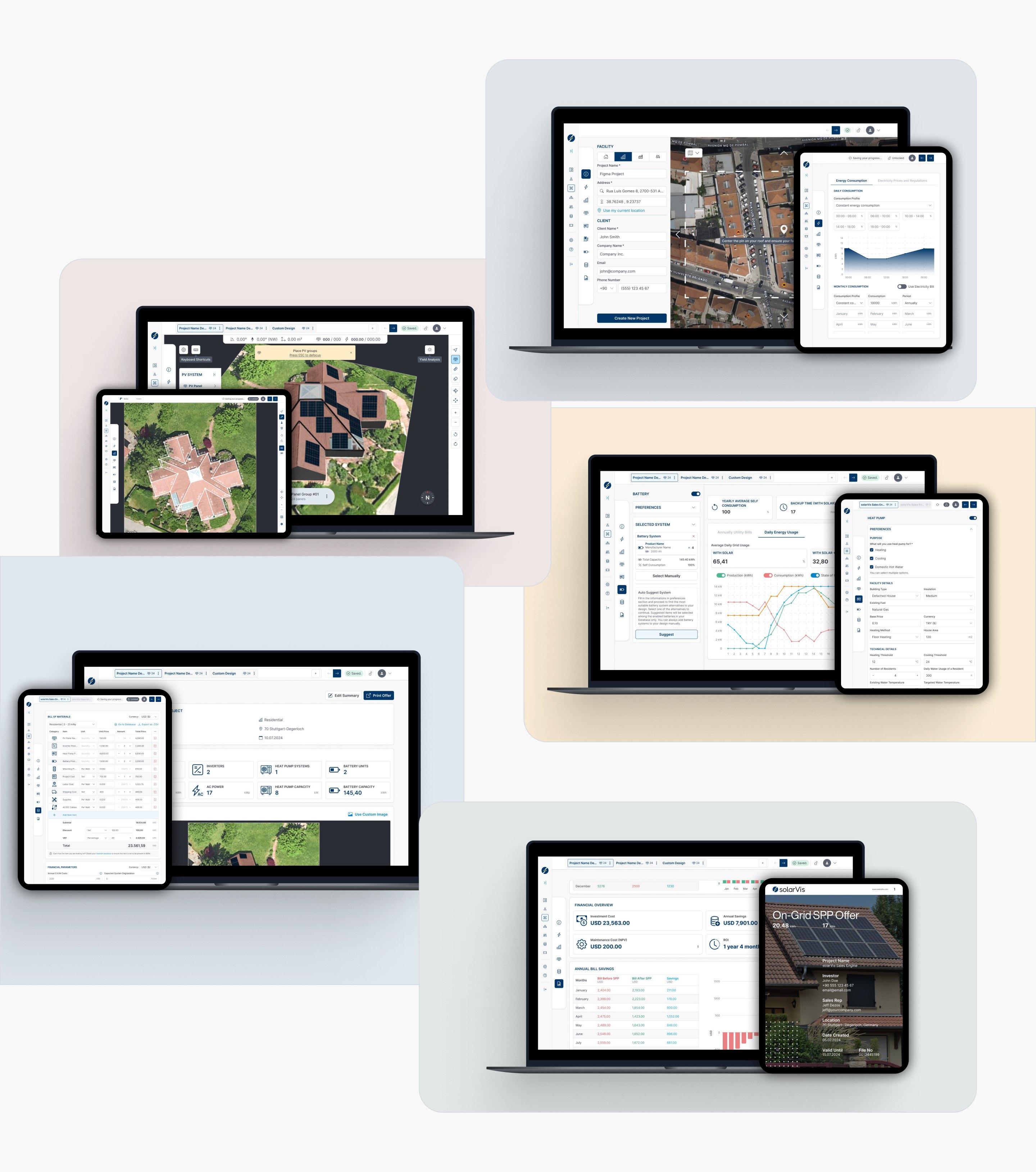
The project flow is where the hours used to go. A salesperson confirms the address on a map, enters the consumption, builds a 3D model of the roof from HD satellite imagery and LIDAR data and places the panels. Batteries, heat pumps and EV chargers are suggested only from the items the company has switched on. The bill of materials and the financial summary follow, and the proposal goes out as a PDF under the installer's own brand.
One brand, every surface
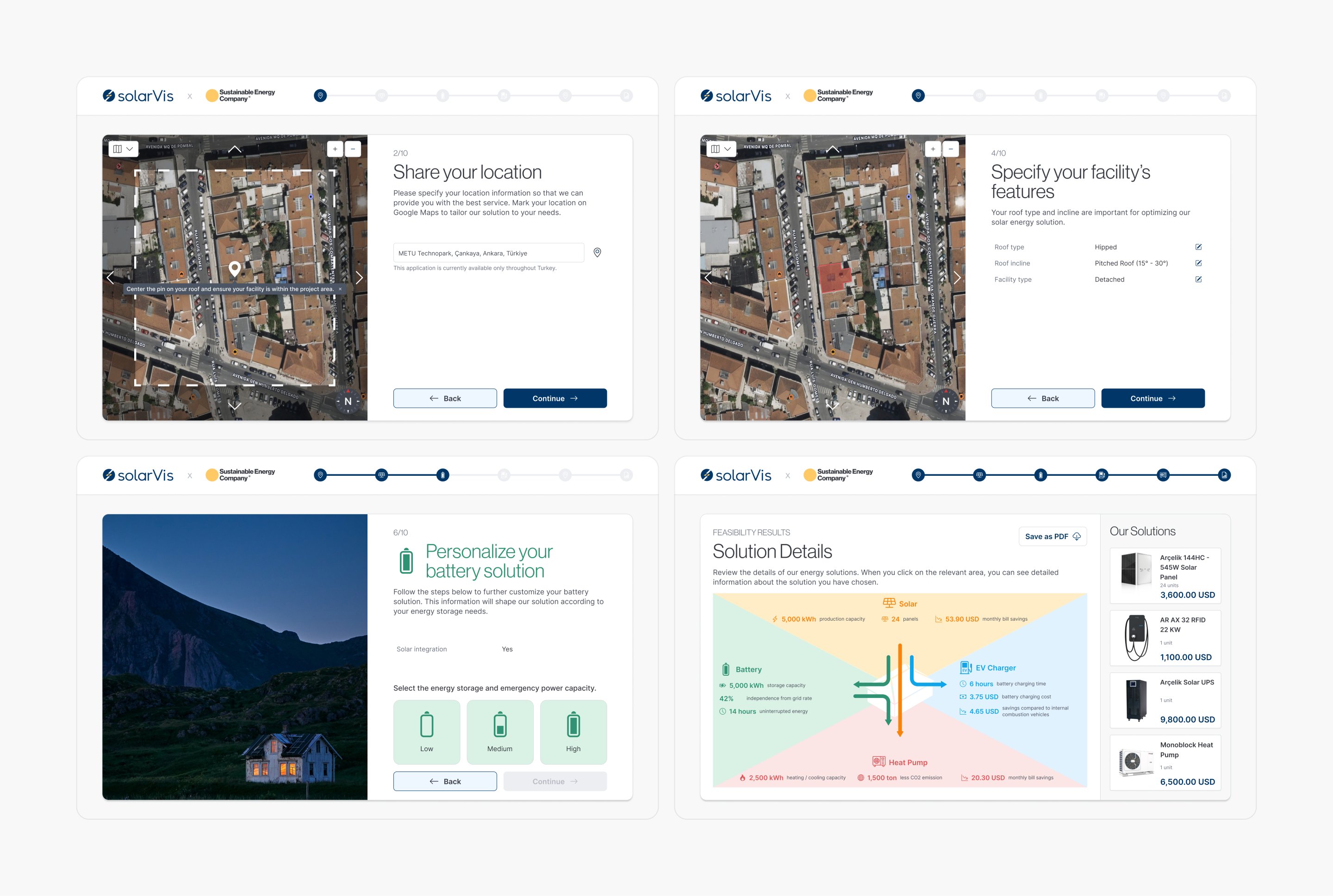
The same identity runs through everything solarVis puts in front of people. A lead generator on installers' websites lets a homeowner check their own roof. They mark the building on the map, describe it, add a battery, an EV charger or a heat pump and see the solutions and savings, and the installer gets a lead with the project already described.
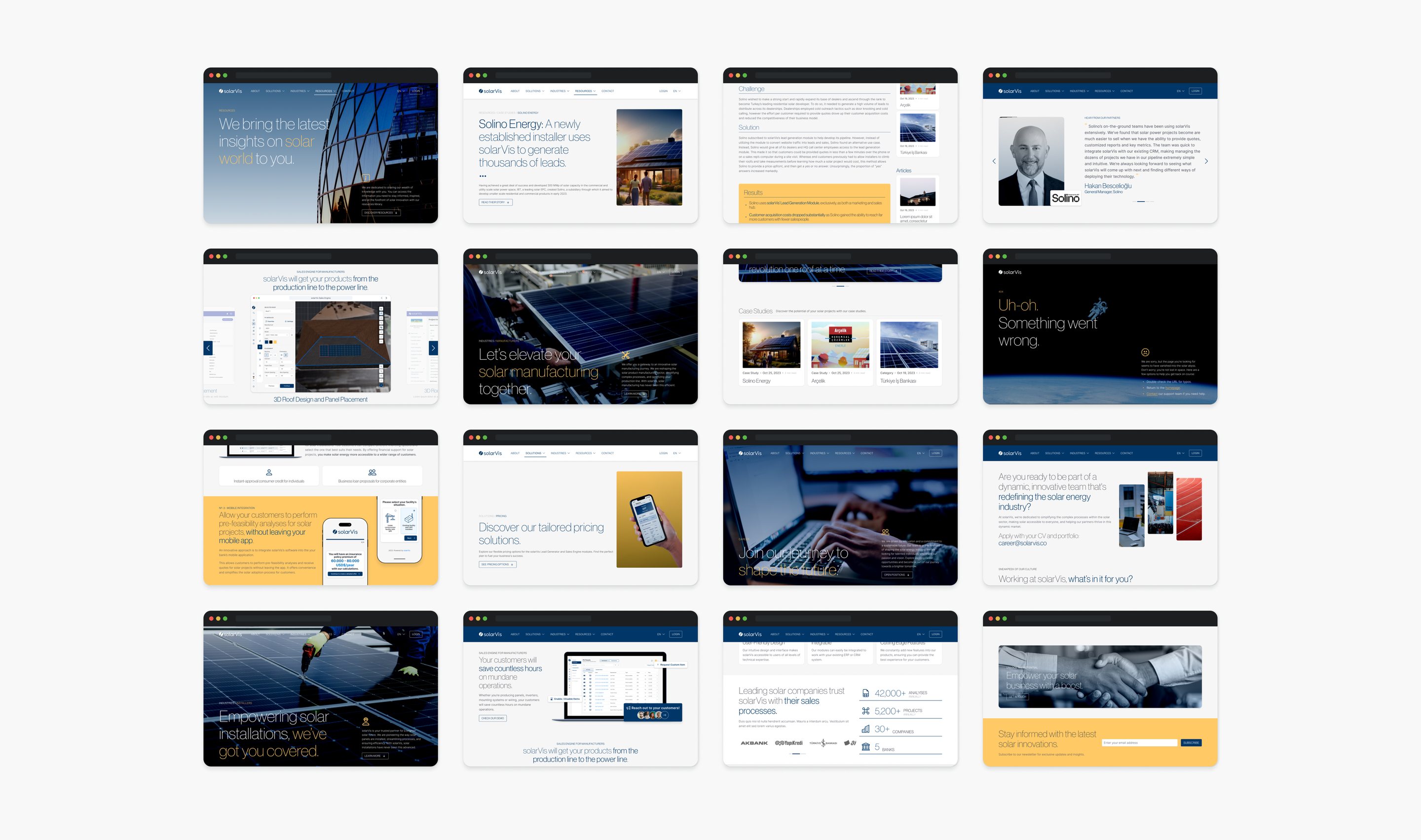
The website is built around the product, with pages for each solution, industry and resource.
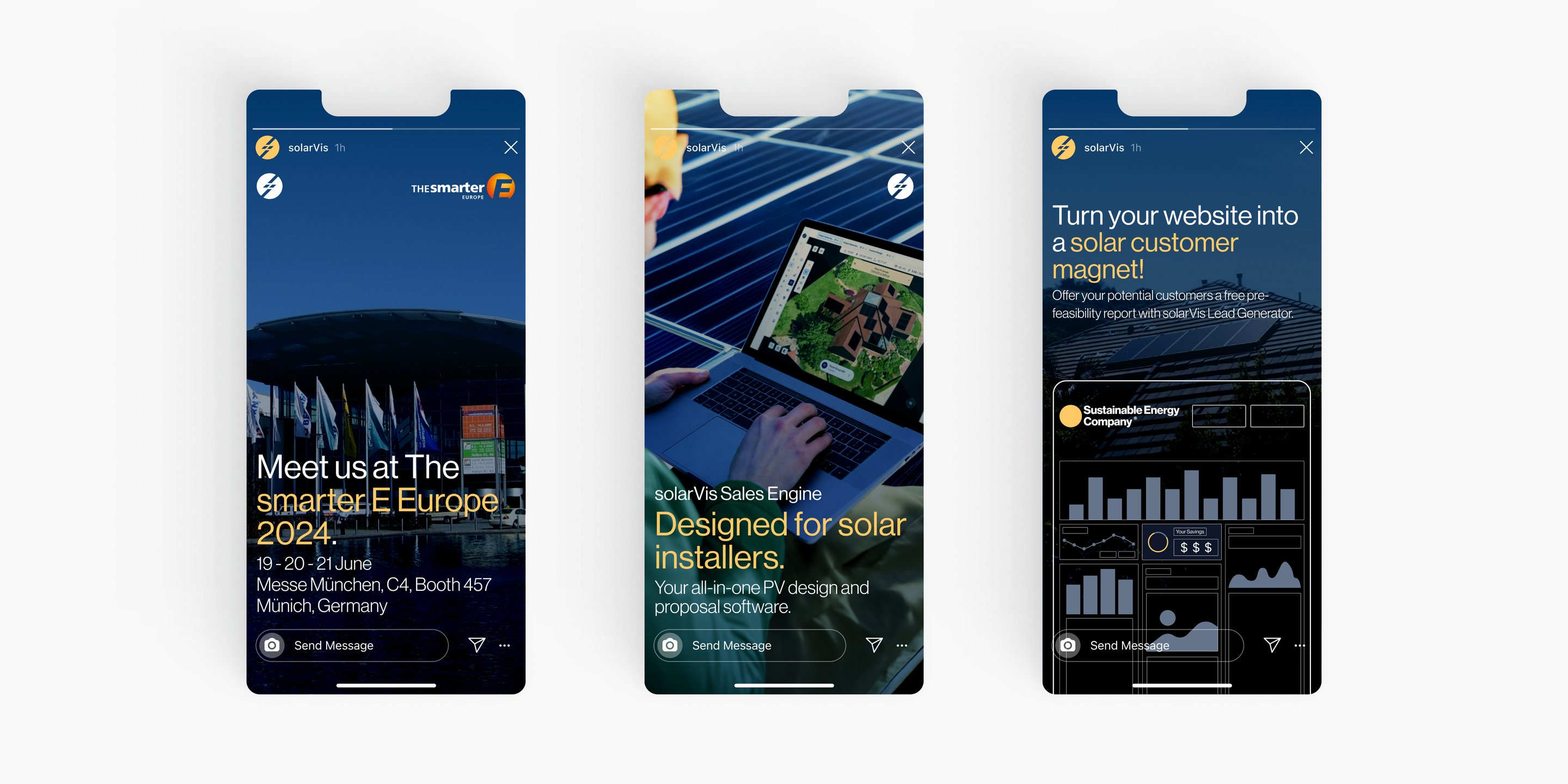
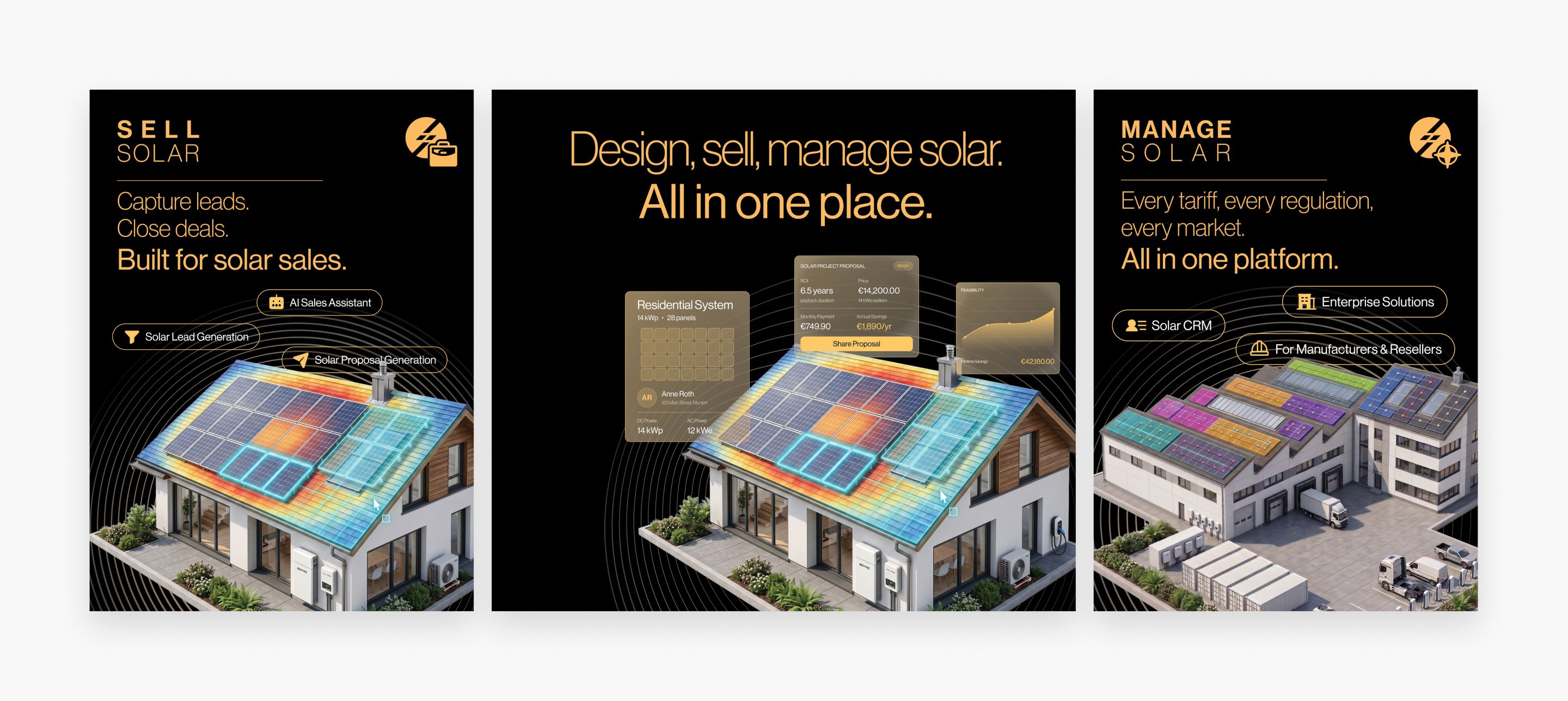
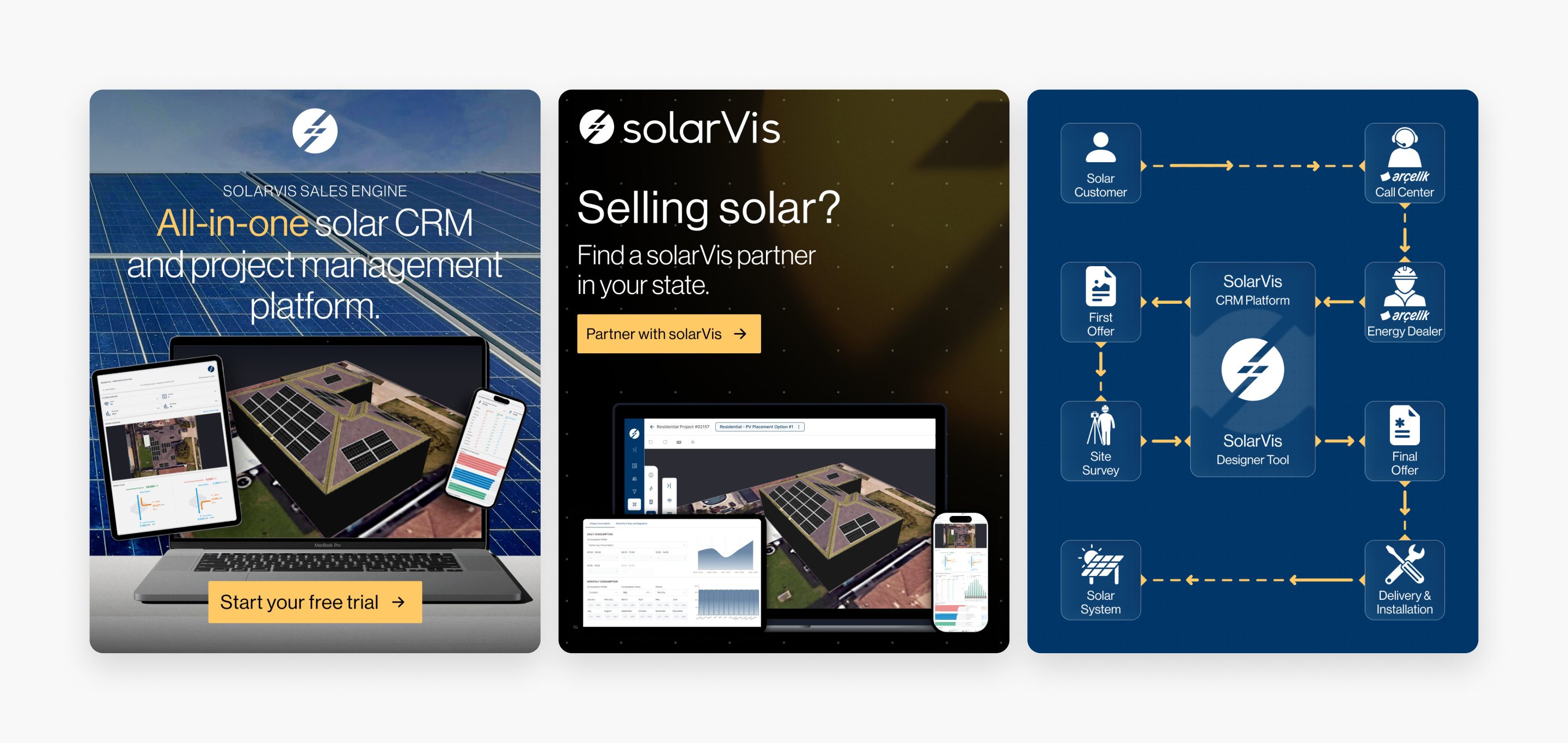
Event stories, the posters for the Intersolar stand and the ad campaigns use the same mark, type and colors, with the product itself as the picture.
Outcome
Sales Engine took proposal preparation from hours to minutes. solarVis now puts it at under 15 minutes, against four to six hours across Excel, PVsyst, PVSOL and AutoCAD.
Compared to the time when we used PVSOL and PVsyst, Sales Engine has greatly accelerated and simplified the project preparation process for us.
The platform has kept growing since, and solarVis today counts more than 1,800 installers in over 45 countries and more than 67,500 proposals. I was its founding designer, and the structure and flows in this case are where it started.